
Traveling often feels like a choice between enjoying new experiences and sticking to your health goals. We’ve all been there, standing in a foreign airport or staring at a restaurant menu, feeling the discipline we have at home start to fade. The good news is that consistency doesn't require perfection. With a bit of preparation, you can savor your trip without completely abandoning your nutrition habits.
Plan Your Nutrition Before You Depart
Success on the road often begins before you even pack your bags. The goal isn't to replicate your home diet perfectly but to maintain a sense of control and reduce decision fatigue. Instead of aiming for a strict calorie deficit, consider shifting your target to maintenance calories. This simple adjustment can reduce the mental pressure of tracking, allowing you to enjoy local cuisine without feeling like you've failed.
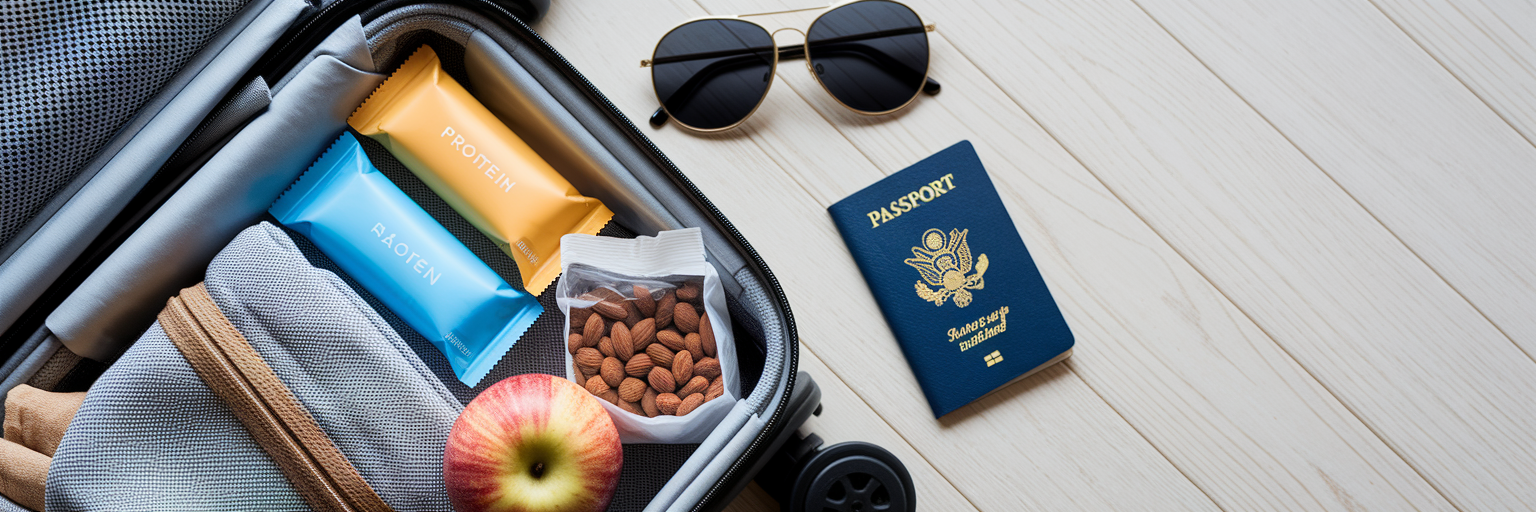
One of the most effective travel nutrition tips is to pack smart snacks. Airport food courts and roadside stops are rarely stocked with options that align with your goals. Having your own supply of healthy travel food prevents you from making impulsive choices driven by hunger. Think about items that are portable, non-perishable, and satisfying.
Consider packing a few of these options:
- Protein bars or jerky for a quick satiety boost.
- Single-serving nut butter packets or bags of almonds.
- Individual protein powder packets to mix with water or milk.
- Dried fruit or whole-grain crackers for easily accessible carbs.
This preparation does more than just curb hunger. It creates a buffer, giving you the flexibility to make mindful choices when you do eat out. When you know you have a reliable snack waiting, you are less likely to overindulge at mealtime simply because you are starving.
Making Mindful Choices on the Go
Once your trip is underway, your focus shifts from preparation to execution. Navigating restaurant menus and local markets requires a different set of skills. This is where you learn how to track calories traveling without a food scale or familiar packaging. It’s less about perfect accuracy and more about consistent, informed estimation. Modern tracking tools are designed to make this process seamless, allowing you to log even estimated portions with ease. For example, our voice-powered calorie and macro tracker is built for these exact moments.
Mastering the Art of Estimation
Without a kitchen scale, your hands become your most reliable measurement tool. This method is surprisingly effective for estimating portion sizes and keeping your logs consistent. It’s a visual shortcut that helps you translate what’s on your plate into data you can track.
| Nutrient/Food Group | Hand Measurement Guide | Visual Equivalent |
|---|---|---|
| Lean Protein (Chicken, Fish) | One palm | A deck of cards |
| Carbohydrates (Rice, Pasta) | One cupped hand | A tennis ball |
| Fats (Oils, Butter, Nuts) | One thumb | A poker chip |
| Vegetables or Fruits | One fist | A baseball |
Note: This guide provides a simple, visual method for estimating portion sizes when precise measurements are not possible, helping maintain logging consistency.
Prioritize Protein and Fiber
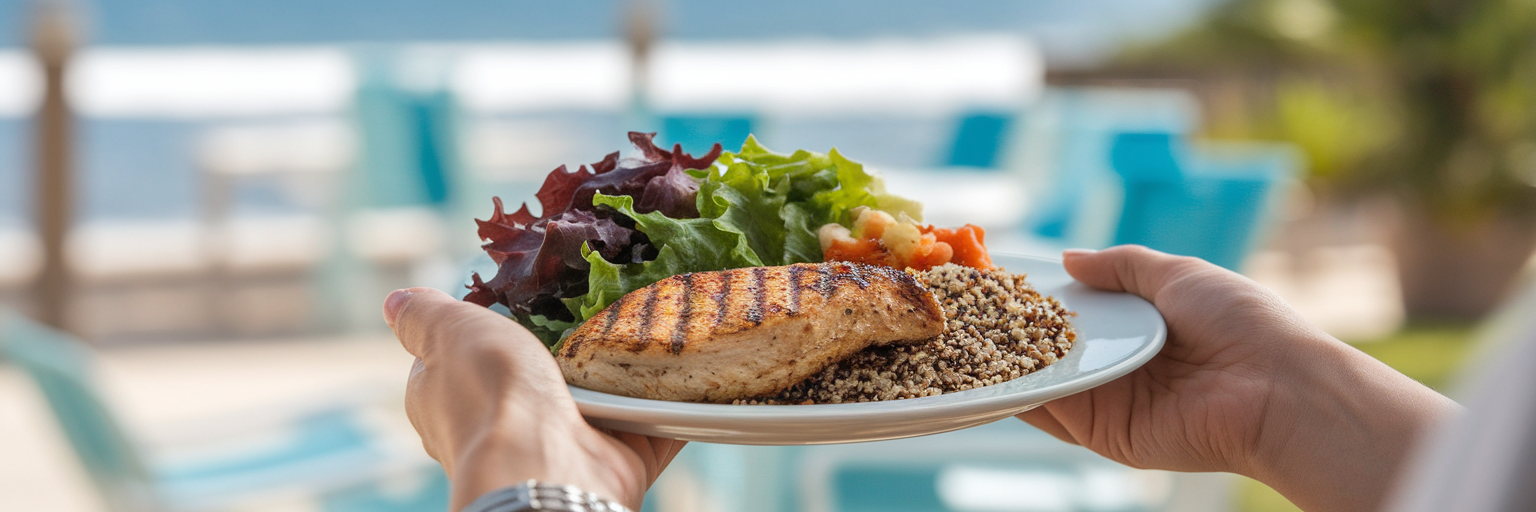
When scanning a menu, look for meals built around protein and fiber. These two nutrients are your best allies for staying full and satisfied. Protein requires more energy to digest and helps preserve muscle mass, while fiber slows digestion, keeping you feeling full longer. A grilled fish fillet with a side of roasted vegetables will always be a more strategic choice than a bowl of creamy pasta.
The 'One Indulgence' Rule
A balanced approach is key to sustainable tracking. Trying local delicacies is part of the travel experience. Instead of forbidding certain foods, adopt a "one indulgence" rule. Each day, allow yourself one special treat, whether it’s a local pastry, a regional cheese, or a craft cocktail. By planning for it, you can savor the experience guilt-free and stay on track with your other meals.
The Advantage of Voice Logging for Travelers
Imagine walking through a bustling market in a new city, sampling street food with friends. The last thing you want to do is stop, pull out your phone, and manually type in every ingredient. This friction is often why tracking habits fall apart during travel. It just feels like too much work. This is where the convenience of voice logging changes everything.
A voice calorie tracker app allows you to log what you eat simply by speaking. While hiking a trail or navigating busy city streets, you can record a meal in seconds without breaking your stride. You just say, "I had a chicken skewer and a small mango smoothie," and the technology handles the rest. This removes the biggest barrier to consistency: the effort of manual entry. It transforms logging from a chore into a fleeting, effortless action.
This shift toward voice interaction is not a niche trend. As a 2023 report from Statista noted, the number of digital voice assistants in use is a familiar and intuitive interaction method for many. People are already comfortable talking to their devices. Applying this to nutrition tracking makes perfect sense, especially for someone on the move. With a tool like our voice-powered calorie and macro tracker, you capture the data in the moment, ensuring accuracy without interrupting your experience.
Tracking Nutrition When You're Offline

What happens when you’re exploring a remote national park or traveling through a country with expensive data roaming? Many nutrition apps rely on a constant internet connection to function, rendering them useless when you're offline. This is a common frustration for travelers, forcing them to either abandon tracking or try to remember everything they ate until they find Wi-Fi.
The solution is an offline calorie counter. An app that processes and stores all your data directly on your device is always available, regardless of your connectivity. You can be on a plane, in a subway, or hiking in the mountains and still log your meals instantly. This on-device approach ensures your tracking remains uninterrupted, providing true consistency no matter where your travels take you. A dedicated offline calorie counter ensures you never miss a log, no matter where you are.
While a purpose-built offline app is the most reliable method, you can also use low-tech backups. Taking a quick photo of your meals creates a visual diary you can reference later. Alternatively, a simple notes app on your phone can be used to jot down what you ate. These methods require more work on the back end but are far better than giving up on tracking altogether.
Protecting Your Health Data Abroad
When you connect to public Wi-Fi at an airport, café, or hotel, you expose your data to potential risks. Many health apps transmit your personal information, including what you eat and when, to cloud servers. This creates a vulnerability, especially when using unsecured networks. We believe your health data is deeply personal and should remain exactly that: private.
A private nutrition tracker built with a privacy-by-design philosophy offers a fundamentally safer approach. This means the app is engineered from the ground up to protect your information. By processing and storing everything on your device in an encrypted database, it eliminates the need to transmit data. If your information never leaves your phone, it cannot be intercepted on a public network.
This is more than just a security feature. When your data is stored on servers in other countries, it may be subject to different and potentially weaker data privacy laws. With an app that requires no account and stores nothing in the cloud, you maintain complete control over your information. You get all the benefits of detailed nutrition tracking without compromising your privacy, giving you peace of mind while you travel.
Easing Back into Your Routine Post-Trip
Returning home from a trip can feel jarring. It’s easy to feel a sense of guilt if your nutrition wasn't perfect. However, the goal is to smoothly transition back to your normal habits, not to punish yourself. A few simple, intentional steps can make all the difference.
- Avoid Post-Vacation Guilt: Acknowledge that a few off-plan days are a normal part of life and resist the urge to over-restrict upon return. Your long-term progress is defined by your overall consistency, not by a single week of vacation.
- Hydrate and Restock Your Kitchen: Focus on two simple actions: drinking plenty of water and shopping for your usual healthy staples. Getting your environment back in order is a powerful signal to your mind and body that you're back to your routine.
- Review Your Travel Data for Insights: Look at your logs to identify what worked. Maybe you discovered a new high-protein snack you enjoyed or noticed the positive effects of walking more. Use these observations to refine your strategy for the future.
By reframing your travel experience as a learning opportunity, you can return home feeling refreshed and motivated, ready to continue your health journey with new insights.