

The Modern Professional's Diet Dilemma
We all know that feeling after a long day of back-to-back meetings and critical decisions. You arrive home mentally drained, and the last thing you want to do is make another complex choice. This state is often described as decision fatigue, where the sheer volume of choices made throughout the day depletes your cognitive resources. It’s precisely at this moment that the goal of maintaining a healthy diet collides with the reality of a demanding career.
For many, the idea of opening a nutrition app and manually searching for ingredients, estimating portion sizes, and logging every detail feels like another job. This friction is why so many attempts at consistent tracking fail. The process is clunky, time-consuming, and simply unsustainable when your mental energy is already spent. You might start the week with great intentions, but by Wednesday, ordering takeout feels far easier than dissecting its nutritional content.
This inconsistency isn't just a personal setback. It directly impacts professional performance. Poor nutrition can lead to energy slumps, reduced focus, and slower cognitive function, the very things you rely on to succeed at work. The challenge of healthy eating for busy professionals isn’t a lack of desire, but a lack of a practical, low-effort system. The traditional tools were not built for the realities of a packed schedule.
From Manual Entry to Automated Logging

Addressing the time crunch described earlier required a fundamental shift in how we interact with nutrition data. The solution came from artificial intelligence, specifically natural language processing (NLP). This technology allows an app to understand regular human speech, turning a tedious task into a simple conversation. Instead of navigating menus, you just speak or type what you ate.
Consider the old method: you ate a chicken salad sandwich. You would have to search for "bread," select the type, find "chicken salad," estimate the amount, and add "lettuce" and "tomato." This could easily take two to five minutes of tapping and scrolling. With a modern voice meal logging app, you simply say, "I had a chicken salad sandwich on whole wheat with lettuce and tomato." The AI parses this sentence in seconds, identifies each component, and logs the nutritional information instantly. What once took minutes now takes a moment.
This is arguably the fastest way to track calories and macros. Beyond speed, AI also enhances accuracy. It draws from vast, verified food databases, minimizing the guesswork and estimation errors common in manual entry. This combination of speed and precision removes the friction that causes people to abandon their goals, making consistent tracking finally achievable even on the most demanding days.
| Action | Manual Logging | AI-Powered Logging (Voice/Text) |
|---|---|---|
| Time per Entry | 2-5 minutes | 5-15 seconds |
| Cognitive Load | High (search, select, adjust) | Low (speak or type naturally) |
| Accuracy | Prone to user error and estimation | High precision from vast datasets |
| Consistency | Difficult to maintain daily | Easy to integrate into micro-moments |
Note: Time estimates are based on logging a multi-ingredient meal. The comparison highlights the efficiency gains that make consistent tracking feasible for busy individuals.
Beyond Calories with Personalized AI Insights
While automated logging solves the time problem, the true potential of AI in nutrition extends far beyond simple data entry. Modern systems act less like a digital food diary and more like a personal nutrition analyst working quietly on your device. It’s not just about what you ate; it’s about what that information reveals over time.
This is where AI for personalized nutrition comes into play. By analyzing your meal logs, the system can identify patterns you might miss. It can connect your afternoon snack choices to your reported energy levels or highlight how certain macronutrient ratios affect your focus during late-day meetings. The AI learns your habits, goals, and even your unique food vocabulary, moving beyond generic advice to offer tailored insights.
Imagine you're out for a client lunch. Instead of guessing which menu item aligns with your goals, you can get an instant nutritional breakdown just by describing the dish. This allows for informed, real-time decisions that support your objectives without disrupting your social or professional life. The AI can even offer predictive recommendations, suggesting simple ingredient swaps or meal ideas based on your past preferences. This adaptive feedback loop creates a sustainable strategy that fits your specific lifestyle, a stark contrast to the rigid, one-size-fits-all diet plans that so often fail.
Integrating Healthy Habits into a Packed Routine
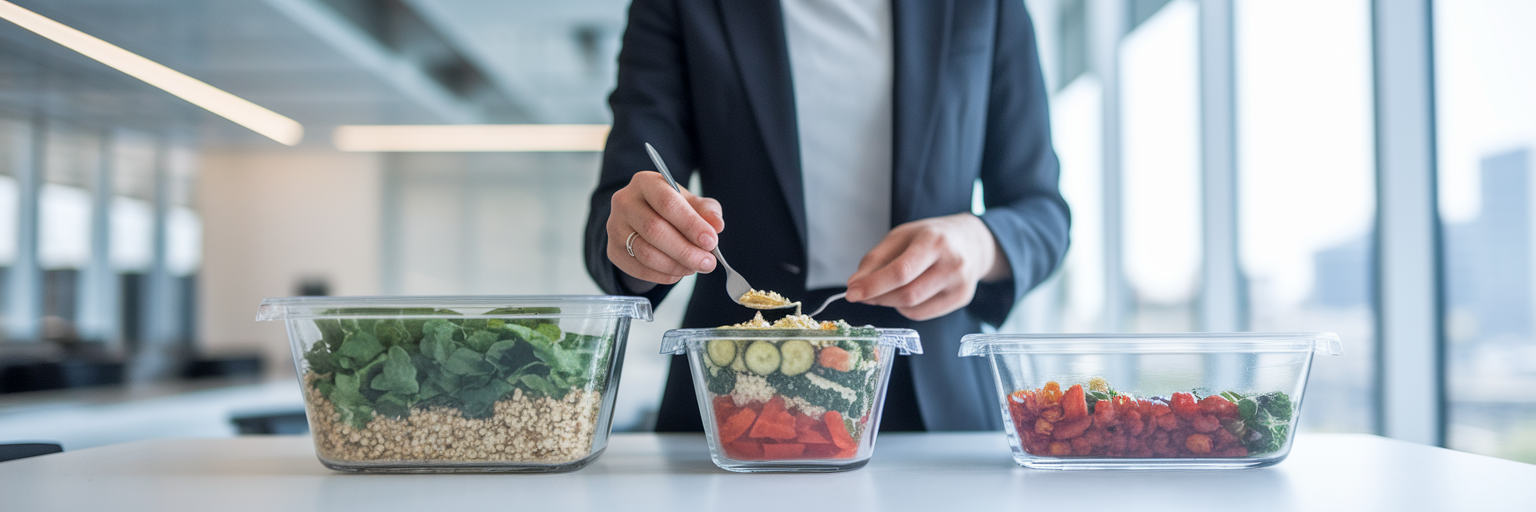
Having a powerful tool is one thing; making it a seamless part of your day is another. The key to sustainable nutrition is integrating healthy habits into your existing routine, not adding more tasks to your to-do list. AI-powered tools excel at this by working with you in the small, often overlooked moments of your day.
Here are a few practical strategies for effective time saving meal tracking:
- Leverage "micro-moments." Use the few seconds you have while waiting for an elevator, in a rideshare, or before a call starts to quickly log a meal with your voice. These small actions add up, making tracking feel effortless.
- Streamline your meal prep. An intelligent app can analyze your most frequently logged meals and help generate a grocery list. This removes the planning burden and ensures you have what you need for a week of healthy eating.
- Use smart, gentle reminders. Instead of disruptive alerts, a good system can offer subtle nudges to log a meal or hydrate, reinforcing positive behaviors without adding to your mental clutter.
This approach is supported by emerging research. As an analysis on News-Medical.net highlights, AI can create personalized nutrition roadmaps that promote sustained focus and better health outcomes. By fitting into the background of your life, the right tool helps you build consistency without demanding more of your limited time and attention.
The Critical Role of Privacy in Personal Health Data
As we entrust technology with more of our personal information, the question of data privacy becomes paramount. Many people are rightfully concerned about their sensitive health data—what they eat, their goals, their habits—being stored on company servers. Once your data is uploaded, it can become vulnerable to breaches or be used for targeted advertising.
A better approach is rooted in a principle called privacy-by-design. This means privacy isn't an afterthought but a core component of the technology. For nutrition apps, this is achieved through on-device processing. All your meal logs, preferences, and nutritional data are encrypted and stored locally on your phone. Nothing is ever sent to a server, and no account is needed. Your information stays with you, period.
This absolute privacy does more than just protect you. It builds trust. When you know your data is completely private, you're more likely to log honestly and consistently, which leads to more accurate personal insights and better results. A private nutrition tracking app empowers you to take control of your health without sacrificing control of your data.
When choosing a nutrition app, consider these non-negotiable privacy standards:
- No accounts required. Your data should not be tied to an online profile.
- On-device processing. Ensure the app confirms that all data stays on your device and is never sent to the cloud.
- No data sharing or selling. The app’s privacy policy should explicitly state that your personal information is never shared or sold.
This is why a new generation of apps that operate entirely on-device is setting a higher standard for user trust. True progress in personal health technology should not come at the cost of your privacy.