
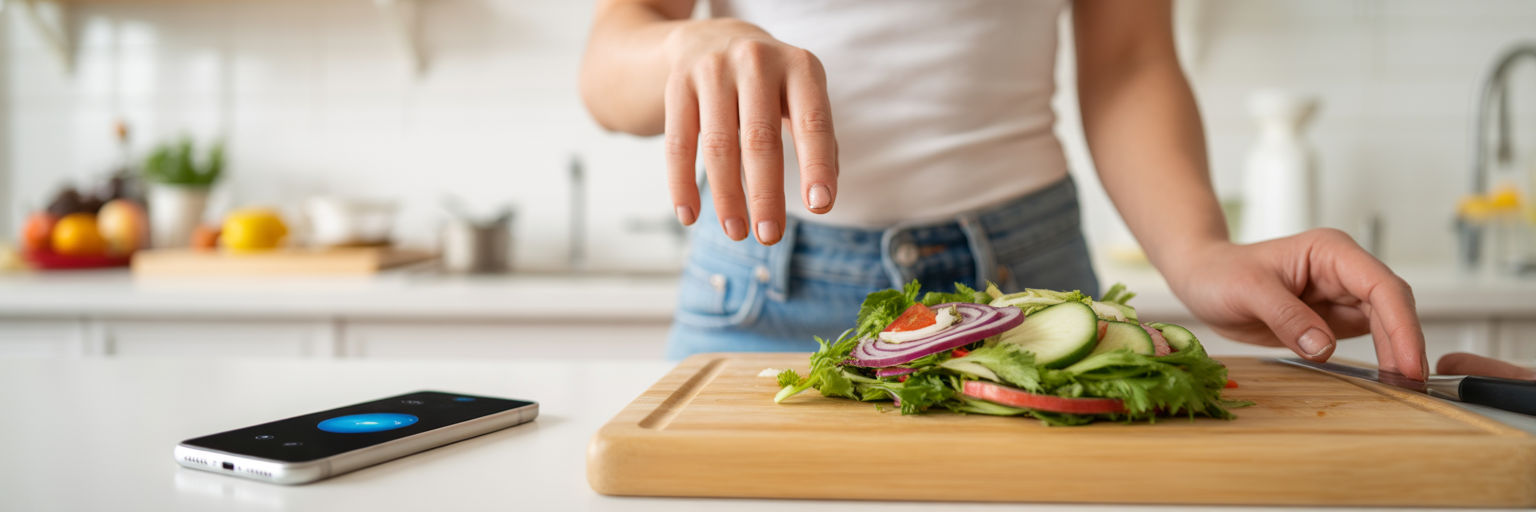
The Modern Approach to Managing Sugar Intake
The average American consumes significantly more sugar than recommended, but the real challenge of a low-sugar diet isn't just willpower. It's the constant, tedious work of reading labels, searching databases, and manually logging every meal. This friction is a common roadblock for even the most health-conscious individuals. A modern track sugar intake app changes this dynamic completely.
Imagine simply speaking what you ate into your phone and getting instant nutritional feedback. This is the power of voice logging. By using your voice, you bypass the slow process of typing and searching. As highlighted by advancements in AI for personalized health, like those explored by ICON.AI, this technology is becoming increasingly sophisticated. Advanced, on-device AI provides this feedback privately and securely, right on your device. None of your personal dietary information is sent to the cloud, creating a foundation of trust that is essential for managing personal health data.
Uncovering Hidden Sugars with Voice Queries

One of the biggest hurdles in managing sugar is identifying it where you least expect it. A voice command nutrition tracker acts as your personal food detective. Instead of squinting at labels in the grocery aisle, you can use natural language to get immediate answers. Ask a direct question like, "How much added sugar is in this brand of Greek yogurt?" to get instant clarity.
This method is especially useful for complex meals. Logging "chicken teriyaki" gives you a vague estimate, but breaking it down reveals the truth. By logging the chicken, rice, and sauce separately, you can specifically query the sugar content of the teriyaki sauce, which is often surprisingly high. This uncovers the hidden sugar in foods that can derail your progress. A comprehensive and up-to-date food database is what allows the AI to accurately identify sugars in both generic items and specific brands.
Use voice queries to investigate common culprits:
- Sauces and Dressings: "Check for high-fructose corn syrup in this ketchup."
- Breakfast Cereals and Yogurts: "How many grams of sugar are in a serving of this granola?"
- Beverages: "Are there artificial sweeteners in this iced tea?"
- Packaged Snacks and Bars: "List the sugar content for this protein bar."
Best Practices for Accurate Voice Logging
The quality of your tracking depends on the quality of your input. To truly master your diet, specificity is everything. There is a significant difference between telling your app you "ate a sandwich" and describing its exact components. The more detail you provide, the more accurate your nutritional data will be.
This table shows how detailed commands improve accuracy:
| Voice Command Type | Example Command | Impact on Accuracy |
|---|---|---|
| Vague Command | 'I ate a sandwich for lunch.' | Inaccurate; misses bread type, fillings, and condiments, leading to a significant underestimation of sugar. |
| Specific Command | 'I had a turkey sandwich on whole wheat bread with lettuce and one tablespoon of mayonnaise.' | Highly accurate; captures all components for a precise calculation of calories, macros, and sugar. |
| Vague Command | 'Log some yogurt.' | Poor; fails to specify type (Greek, flavored), fat content, or brand, which dramatically alters sugar content. |
| Specific Command | 'Add a five-ounce container of Chobani strawberry Greek yogurt.' | Precise; identifies the exact product and portion, ensuring correct sugar and nutrient data is logged. |
Always include portion sizes, such as, "Log one cup of oatmeal with a tablespoon of brown sugar." While voice recognition is highly accurate, it is a good practice to quickly review the AI-generated entry to confirm its details. To make this a consistent habit, log meals with voice during meal prep or immediately after eating, while the details are still fresh in your mind. Modern apps are designed for this frictionless experience, and a privacy-first tool like the one we built makes it simple to capture meal details on the go.
Building a Low-Sugar Meal Plan on Demand

A voice-powered tracker is not just for recording what you have already eaten. It can be a proactive tool for planning. Instead of guessing, you can use your voice to build a meal plan that aligns with your goals. Try asking, "Suggest a dinner recipe with less than 10 grams of sugar," to get immediate ideas. This transforms your app from a simple logbook into a dynamic meal planner.
You can also set daily sugar limits and use voice as a real-time checker. Before you eat, ask, "If I eat this pasta dish, will I exceed my daily sugar goal?" This empowers you to make informed decisions in the moment. You can even plan an entire day by asking, "Plan a full day of meals that keeps my added sugar below 25 grams." These low-sugar diet tips help you adhere to established health guidelines. For instance, the CDC recommends that Americans keep their intake of added sugars to less than 10% of their total daily calories. A modern voice command nutrition tracker like the one we designed can help you stay on target with your health goals by making this process simple and intuitive.
Analyzing Your Sugar Intake for Long-Term Success
True dietary change comes from understanding your habits over time. Once you have consistently logged your meals, you can use your app to analyze your behavior. Ask analytical questions like, "Show my average daily sugar intake for the last month," or, "What day of the week do I eat the most sugar?" This moves you from simple tracking to genuine dietary insight.
Use these insights to build a sustainable strategy:
- Log Consistently: Capture every meal and snack with specific voice commands to build a reliable dataset.
- Ask Analytical Questions: Use voice queries to review trends over weeks or months.
- Identify Your Patterns: Pinpoint specific times, days, or foods that contribute most to your sugar intake, such as weekend desserts or afternoon snacks.
- Make Targeted Adjustments: Use the insights to find low-sugar alternatives or change specific habits.
This data-driven approach empowers you to make proactive adjustments instead of guessing what works. An app like ours that securely stores your data on-device allows you to confidently review your personal nutrition trends over time, knowing your information remains completely private.
Making Smarter Choices with Private Voice Assistance
Voice logging transforms sugar tracking from a chore into a simple, conversational habit. The real power of this technology lies in its privacy-first design. When you know your sensitive health data is secure and stored only on your device, you are more likely to track consistently and honestly. This creates a reliable picture of your dietary habits. The future of personal health management is here, with intuitive, voice-powered AI acting as a trusted and private partner in achieving your wellness goals.