

Understanding the Mediterranean Diet's Macro Profile
The Mediterranean diet is consistently ranked among the healthiest eating patterns, yet its greatest strength—variety—is also its biggest tracking challenge. Unlike diets with rigid rules, its macronutrient philosophy is about the quality of the source, not just the numbers. It emphasizes healthy fats from olive oil and nuts, lean proteins from fish and legumes, and complex carbohydrates from fresh vegetables and whole grains.
The focus is on where your macros come from. Think of the difference between fat from an avocado versus fat from processed cheese. The diet encourages the former, creating a flexible and nutrient-dense framework. This is where the difficulty begins for anyone trying to log their intake. A typical Mediterranean meal is a mosaic of ingredients. A Greek salad might contain feta, Kalamata olives, cucumbers, tomatoes, red onions, and a lemon-oil dressing. A seafood paella could have shrimp, mussels, rice, saffron, and various vegetables.
Manually entering each of those components into a tracker is tedious. We’ve all been there, squinting at our phone, trying to find the right entry for "Kalamata olives" and giving up halfway through. This friction is the enemy of consistency. When tracking feels like a chore, it’s the first habit to be dropped. This complexity makes a specialized mediterranean diet meal tracker app not just a convenience, but a necessity for long-term success.
How Voice Logging Simplifies Complex Meal Tracking

That complexity in Mediterranean meals is precisely where traditional tracking methods fall short. Instead of fighting with a search bar and keyboard for every ingredient, voice logging for nutrition offers a more natural solution. Imagine simply saying, "I had a Greek salad with grilled chicken, feta, olives, and a lemon-oil vinaigrette." The task is done in seconds. This method captures the meal in the moment, preserving details that might be forgotten by the time you sit down to type them out later.
Modern AI can parse that single sentence, identifying each ingredient and estimating quantities from your natural language. This technology is at the core of modern nutrition tools, and for those interested in seeing it in action, a voice-powered calorie and macro tracker offers a direct way to experience this efficiency. It transforms the entire process from a data entry task into a simple conversation.
The psychological benefit here is significant. When you remove the friction of manual logging, tracking no longer feels like a burden. It becomes a seamless habit that integrates into your daily routine, much like checking the weather. This shift is critical for long-term adherence to any eating plan. It makes nutrition management a sustainable practice rather than a temporary effort. This is what easy macro tracking should feel like: intuitive, fast, and supportive of your goals, not a distraction from them.
Strategies for Ensuring Accuracy with Voice Commands
While voice logging is fast, its precision depends on how you use it. Providing clear, descriptive commands is the key to getting accurate results. Here are a few strategies to make your voice entries as precise as possible.
- Be Descriptive with Your Language: The detail you provide directly impacts the accuracy of the macro calculation. Instead of saying "chicken salad," a more effective command is "6 ounces of grilled chicken breast on two cups of romaine with cherry tomatoes and two tablespoons of olive oil vinaigrette." Specificity removes ambiguity.
- Adopt the 'Trust but Verify' Principle: After you log a meal, take a moment to review the AI's interpretation. This quick check takes only a few seconds but ensures the entry is perfect. It also keeps you in full control of your data, reinforcing that the tool works for you, not the other way around.
- Rely on a Verified Food Database: The accuracy of any accurate calorie counting app is only as good as its data source. The best apps use curated, verified food databases, avoiding the inconsistencies of user-generated entries that can be riddled with errors.
- Create Custom Meals for Your Go-To Recipes: If you have a favorite morning smoothie or a weekly lunch prep, enter the detailed ingredients once and save it as a custom meal. From then on, you can log it instantly with a simple command like, "Log my morning smoothie."
The reliability of these systems hinges on sophisticated programming and data management. Understanding the fundamentals of automation and accuracy in digital workflows helps clarify why a well-designed app can interpret complex commands so effectively. The more information you give the system, the better it can serve you.
| Vague Command | Descriptive Command | Why It's More Accurate |
|---|---|---|
| 'I had a salad for lunch.' | 'I had a Greek salad with 4 ounces of grilled chicken, 1 ounce of feta, and 2 tablespoons of vinaigrette.' | Provides specific ingredients and quantities for precise macro calculation. |
| 'I ate some fish and vegetables.' | 'For dinner, I had a 6-ounce salmon fillet with a cup of roasted asparagus and a drizzle of olive oil.' | Specifies the type of fish, portion size, and cooking method, which all affect macros. |
| 'I had a yogurt bowl.' | 'I had one cup of Greek yogurt with a half cup of blueberries and one tablespoon of honey.' | Differentiates between types of yogurt and quantifies high-carb additions like honey. |
| 'I ate some nuts.' | 'I snacked on one ounce of almonds.' | 'Some' is subjective; a specific weight or volume provides actionable data. |
Note: This table illustrates how adding detail to voice commands directly improves the accuracy of macro tracking. The more specific the input, the more precise the nutritional output.
Advanced Techniques for Consistent and Private Tracking
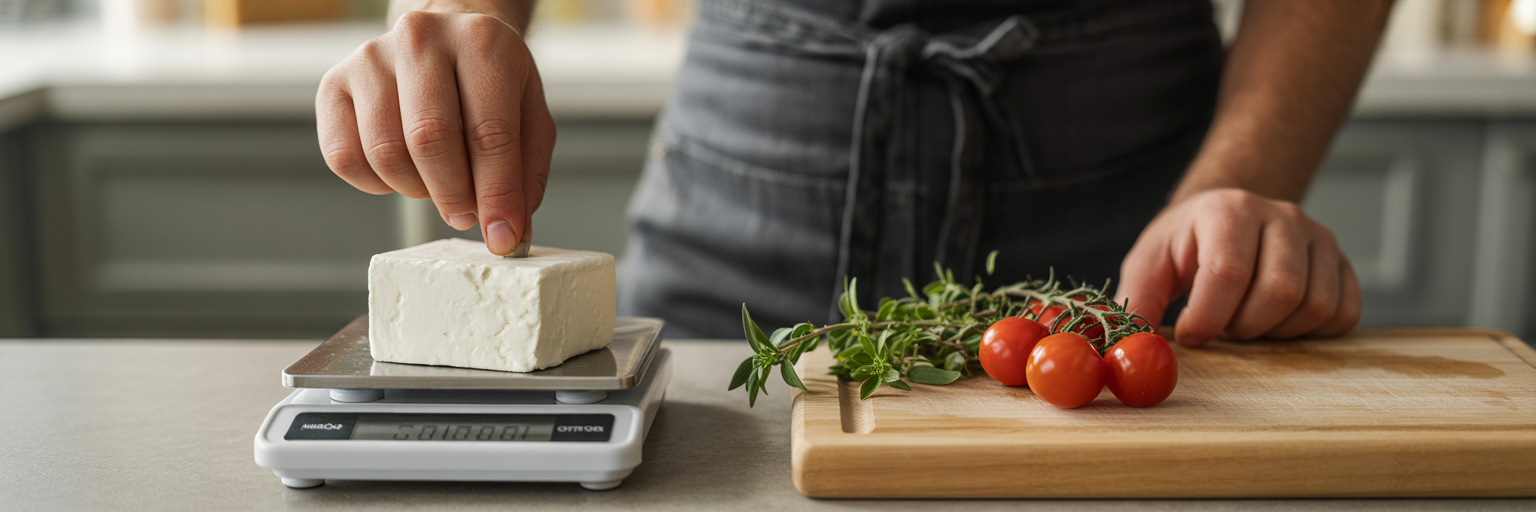
Once you are comfortable with voice logging, you can refine your approach with a few advanced techniques. For instance, a hybrid tracking method combines the speed of voice with the precision of other tools. While you can voice log a complex homemade meal, you might use barcode scanning for packaged Mediterranean staples like whole-wheat pita or a specific brand of feta cheese. This gives you the best of both worlds: speed for whole meals and exactness for packaged goods.
More importantly, long-term consistency in tracking is directly tied to trust. Would you consistently share your private health information if you weren't sure where it was going? This is why data privacy is not just a feature; it is essential for anyone serious about how to track macros on mediterranean diet. We believe your personal data belongs to you. Apps that perform all processing on-device, with no information sent to servers, provide the peace of mind needed for daily tracking.
This level of security is a cornerstone of a privacy-first design, where user data is never collected, shared, or sent to a server, ensuring complete confidentiality. When you know your logs are secure, you are more likely to track consistently. This allows you to use reporting features to analyze long-term macro trends, turning daily entries into valuable insights about your health journey.
The Evolving Landscape of Nutrition Technology
Nutrition technology is continually improving, with a clear focus on making health management more intuitive. In the near future, AI will likely become even better at understanding context, distinguishing between "a splash of olive oil" and "two tablespoons" without needing you to be overly specific. We may also see deeper integrations with other smart devices. Imagine a smart fridge that communicates its contents directly to your nutrition app, making logging nearly passive.
However, the ultimate purpose of these advancements is not to add more technology to your life, but to simplify healthy living. The goal is to spend less time logging and more time enjoying your food and the lifestyle you are building. As technology continues to advance, the goal remains to make nutrition tracking more intuitive and less intrusive, a principle that guides the development of next-generation nutrition tools. Technology should work silently in the background, supporting your goals without demanding your constant attention.