
Why Voice Is a Simpler Way to Log Food
We have all been there. You start the day motivated to track your meals, only to find yourself ten minutes later, endlessly scrolling through a food database for the right kind of bread. The tediousness of manual entry, the constant searching, and the time it takes can quickly turn a health goal into a chore. Many people give up, thinking the problem is their lack of discipline, but the real issue is often the tool itself.
This is where voice technology changes the equation. Instead of typing and searching, you simply speak. Logging a meal becomes as natural as telling a friend what you ate for lunch. This removes the biggest point of friction in calorie tracking, making it faster and more convenient. You can log your meal in the moment, right after you eat, when the details are still fresh in your mind. This immediate capture improves accuracy significantly.
An easy food logging app that uses voice isn't just about saving a few seconds. It’s about transforming a frustrating task into a seamless action. By eliminating the manual work, voice technology makes it possible to build a consistent tracking habit without disrupting your day. It’s a more direct path to understanding your nutrition.
Setting Up Your First Voice Calorie Tracker

Getting started with voice logging is straightforward, but choosing the right tool is the most important first step. While your phone's built-in assistant can set timers or send texts, a dedicated voice activated calorie counter is engineered specifically to understand food. These specialized apps offer far greater accuracy because their language models are trained on nutritional terms, portion sizes, and preparation methods.
Once you have chosen a dedicated tool, the setup is simple:
- Download the app from the store. A quality tool like our app is designed specifically for this purpose, focusing on a clean and efficient user experience.
- Grant microphone permission. This might sound concerning, but with the right app, this permission is only used for on-device speech recognition. Your voice is processed directly on your phone and is never sent to a server.
- Do a quick test entry. Try saying something simple like, "I had a medium apple and a tablespoon of peanut butter." This confirms everything is working and gives you a feel for the process.
Before you even start, consider the privacy implications. The most secure applications process and store all your data locally on your device. This means you don't need to create an account, and your sensitive health information never leaves your phone. Choosing a private calorie tracking app from the beginning ensures your data remains yours alone.
Best Practices for Accurate Voice Logging
Voice technology is powerful, but it cannot read your mind. The key to getting accurate nutritional data is to communicate with clarity and detail. Vague commands will only yield vague results. By adopting a few simple habits, you can ensure your logs are precise and genuinely useful for your health goals.
First, be descriptive. Instead of just saying "chicken sandwich," specify the components. Was it grilled or fried? On whole wheat or white bread? Did it have cheese or mayonnaise? Each detail matters. The more specific you are, the more accurate your calorie and macro breakdown will be. This is how you truly log meals by speaking effectively.
Second, always state quantities and portion sizes. Use clear units like "one cup of rice," "four ounces of salmon," or "two slices of bacon." As research from the Harvard T.H. Chan School of Public Health highlights, accurate portion estimation is fundamental to successful dietary management. If you are unsure, using measuring cups for a week can help you better estimate portions by sight.
Finally, break down complex meals. For homemade dishes or restaurant meals without clear nutritional information, list the primary ingredients. This level of detail is crucial for everything from a complex homemade lasagna to a simple post-workout shake. Knowing the specific ingredients, including the type of protein powder you use, ensures your macro count is correct. As resources like Beyond Good Foods explain, nutritional values can vary significantly between different supplements, making specificity key.
| Vague Command (Less Accurate) | Specific Command (More Accurate) | Why It's Better |
|---|---|---|
| 'Log my coffee' | 'Log one large black coffee with two tablespoons of heavy cream' | Specifies size and additions for precise calorie/fat count. |
| 'I had a salad for lunch' | 'I had a garden salad with grilled chicken, tomatoes, cucumbers, and two tablespoons of Italian dressing' | Details protein, vegetables, and dressing for a full nutritional breakdown. |
| 'Log some pasta' | 'Log two cups of whole wheat pasta with a half cup of marinara sauce and three beef meatballs' | Provides exact quantities and components of a complex meal. |
Making Voice Tracking a Daily Habit
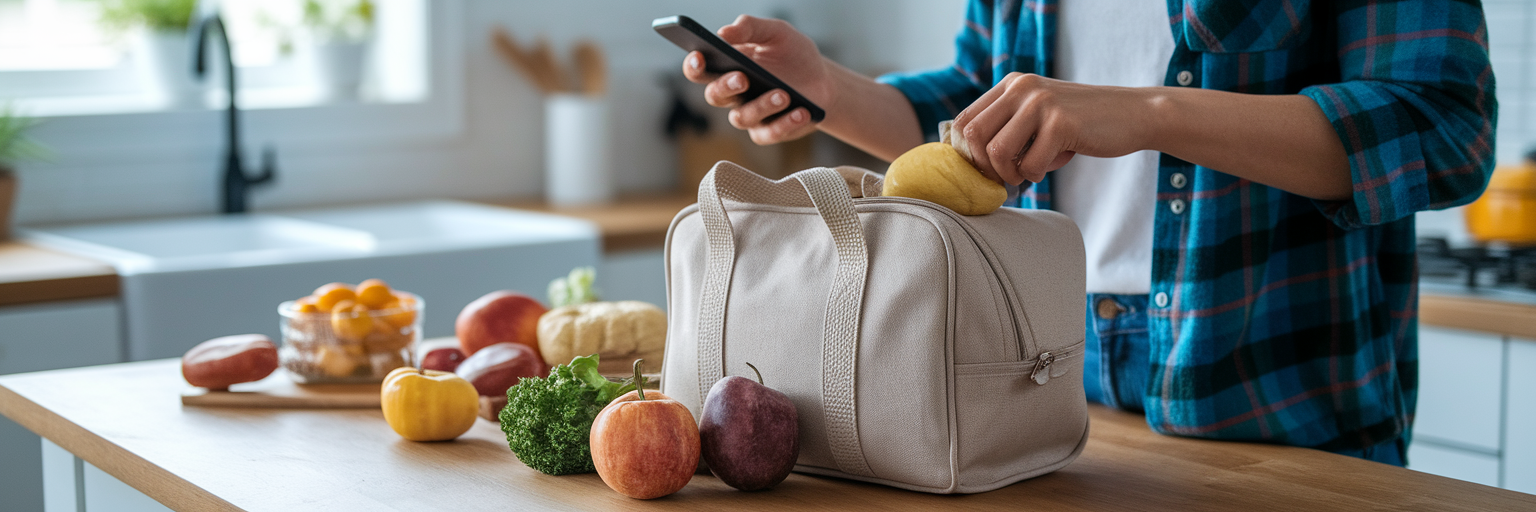
Knowing how to log your meals is one thing; making it a consistent part of your daily routine is another. The goal is to make tracking feel automatic rather than like another task on your to-do list. The key is not about finding more motivation, but about building a system that works for you.
One effective technique is "habit stacking." This involves linking the new behavior of logging your food to an existing habit. For example, you could make a rule to log your lunch right after you put your plate in the sink. Or you could log your dinner while the kitchen timer counts down for your tea. By attaching the new habit to an established one, you remove the need to remember to do it.
Another way to build consistency is by using shortcuts for meals you eat frequently. Advanced apps learn your patterns over time, allowing you to simply say, "log my usual breakfast," to record a meal you have logged before. This is an example of how to track calories with voice in the most efficient way possible. Modern apps, including the one we built, often include features that learn your habits and help build these routines automatically.
Remember, the purpose of all this data is to gain insight. Take a moment each week to review your daily summaries. You might notice trends, like higher fat intake on weekends or lower protein on busy weekdays. This awareness is what empowers you to make small, informed adjustments that lead to long-term success.
Why On-Device Tracking Protects Your Privacy
When you track your meals, you are creating a detailed and personal record of your health and lifestyle. A critical question to ask is: where does that data live? Many health apps sync your information to company servers, where it can be vulnerable to data breaches or used for targeted advertising. On-device processing offers a fundamentally different and more secure approach.
On-device processing means that all your data is handled and stored directly on your phone. Your voice commands are interpreted locally, and your meal logs are saved in an encrypted database on your device. Nothing is ever sent to a company's server. This approach ensures your sensitive health information remains completely private and under your control.
When choosing a private calorie tracking app, look for these key indicators of a privacy-first design:
- No account or sign-up required. If an app doesn't ask for your email or personal details, it has no way to link your data back to you.
- All data is stored locally and encrypted. The app should explicitly state that your information never leaves your device.
- A clear policy stating data is never sold or shared. Trustworthy companies are transparent about their data practices.
As the U.S. Federal Trade Commission (FTC) often warns, consumers should be cautious about how health apps handle their data. A transparent company will make its policies easy to find and understand, like in our privacy policy. Choosing the right tool means you never have to trade your privacy for your health goals.