
Why Prioritizing Fiber Matters for Your Health
Most Americans consume only about 15 grams of fiber per day, falling significantly short of what health experts recommend. This gap matters because dietary fiber is a powerhouse for overall wellness. It is not just about roughage; it comes in two distinct forms, each with a unique job.
Think of soluble fiber, found in oats, beans, and apples, as a gel that moves through your digestive system. It helps manage cholesterol and stabilize blood sugar levels, contributing to heart health and sustained energy. Then there is insoluble fiber, present in whole grains and vegetables. This type acts more like a broom, adding bulk and promoting regularity to keep your digestive system running smoothly.
Incorporating both types of fiber into your diet delivers several key benefits:
- Maintains digestive health by preventing constipation and supporting a healthy gut microbiome.
- Promotes satiety, that feeling of fullness, which can aid in weight management by reducing the urge to overeat.
- Helps stabilize blood sugar by slowing the absorption of sugar, preventing sharp spikes and crashes.
To get these benefits, the Academy of Nutrition and Dietetics suggests a clear target: 25 grams of fiber per day for women and 38 grams for men. Knowing this number is the first step, but consistently hitting it requires awareness of what you eat each day.
The Common Frustrations of Manual Nutrition Logging
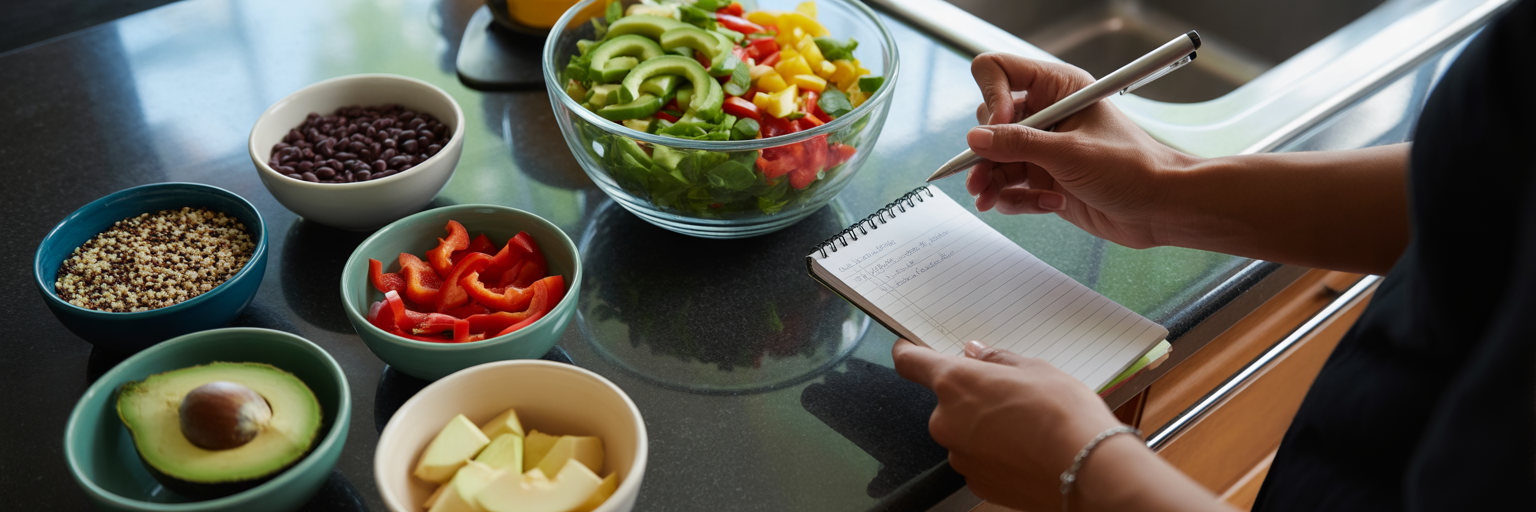
If you have ever tried to track your food intake, you likely know the feeling. You prepare a healthy, high-fiber quinoa salad with black beans, corn, avocado, and a light vinaigrette. You feel great about your meal choice until it is time to log it. Suddenly, you are scrolling through endless database entries, searching for each ingredient one by one, and guessing at portion sizes. What started as a two minute meal becomes a ten minute data entry chore.
This tedious process is a common reason why many people abandon nutrition tracking. The friction is just too high. Generic database entries often fail to match the specific brand of canned beans you used or the exact recipe of your homemade dressing, leading to inaccurate and unreliable data. When your daily totals are based on guesswork, it is difficult to know if you are truly meeting your fiber goals.
This inconsistency, driven by a clunky and time consuming process, ultimately defeats the purpose of tracking. You lose the clear picture of your dietary habits you were trying to create in the first place. The effort feels wasted, and the goal of understanding your nutrition remains just out of reach.
| Task | Typical Time Spent (Manual Logging) | Key Frustration |
|---|---|---|
| Log a multi-ingredient salad | 3-5 minutes | Searching for each item separately |
| Find a specific brand/product | 1-2 minutes | Database lacks exact match, forcing guesswork |
| Estimate portion sizes | 1-2 minutes | Inaccurate estimations skew daily totals |
| Daily logging total | 10-15 minutes per day | Process feels like a chore, leading to inconsistency |
Note: Time estimates are based on common user experiences with traditional, search-based nutrition tracking applications.
Logging Fiber-Rich Meals Instantly with Your Voice
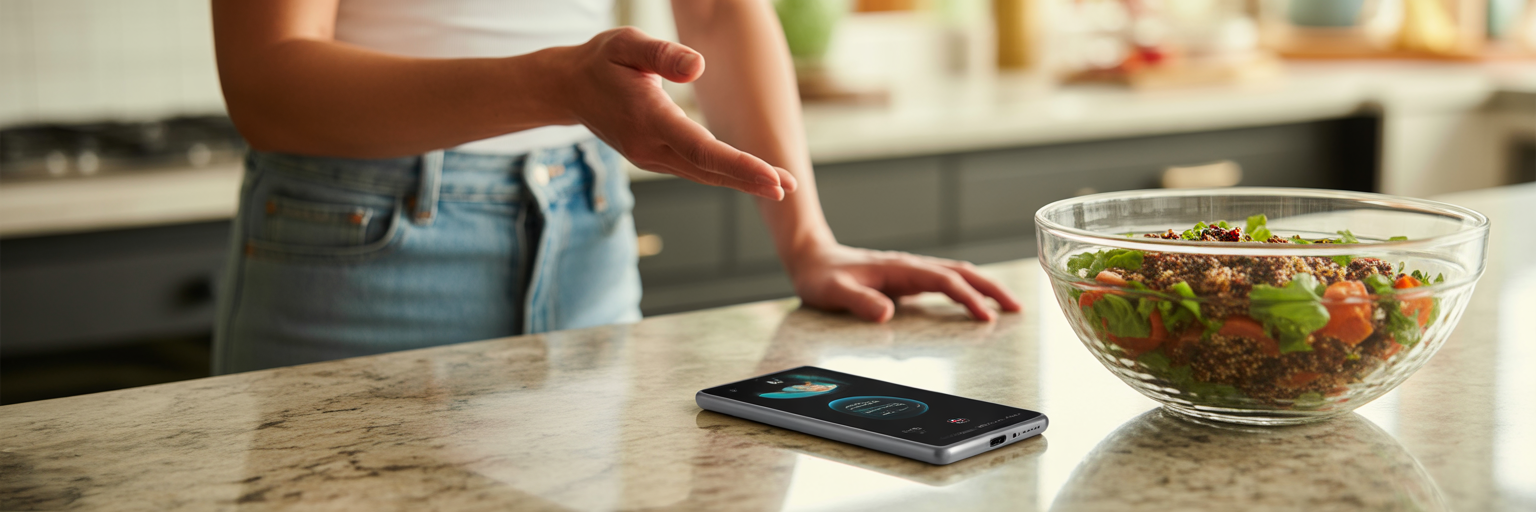
Instead of navigating menus and typing out ingredients, imagine simply stating what you ate. This is the efficiency of voice-first technology. Using on-device artificial intelligence, these tools interpret natural language to instantly capture your meals without the friction of manual entry. This is a smarter approach to how to track fiber intake.
For example, you can use simple voice command food logging by saying, “For lunch, I had a medium bowl of lentil soup and a side salad with vinaigrette.” Or, after breakfast, “I ate one cup of oatmeal with a tablespoon of chia seeds and a handful of blueberries.” The AI processes the entire sentence, identifies the foods and quantities, and logs the nutritional information in seconds. This convenience makes it far easier to stay consistent, especially on busy days.
This method also improves accuracy. The technology is designed to understand the context of multi-ingredient meals, reducing the guesswork that comes with searching for individual items. This shift toward intelligent, user-centric tools is part of a larger movement in health tech. As detailed by pioneers like Icon Medicine, AI innovations are enabling more personalized and precise health management. When you can log meals by speaking, you are not just saving time; you are getting a more reliable picture of your diet. With a privacy-first approach like ours at Saylo AI, this convenience comes without compromising your data security.
Monitoring Daily and Weekly Fiber Intake Trends
Consistent logging is only half the battle; the real value comes from turning that data into actionable insights. The immediate feedback from voice logging allows you to see your real-time fiber count throughout the day. If you notice you are falling short of your goal by late afternoon, you can easily make an adjustment, like adding a pear or a handful of almonds to your snack.
Beyond daily adjustments, the power lies in long-term trend analysis. By reviewing your data over time, you can uncover patterns that influence your health and well-being. Here are a few daily fiber tracking tips for using your data effectively:
- Check daily totals against your goal. A quick glance confirms if you are on track, turning your fiber target into a measurable daily achievement.
- Review weekly charts to spot patterns. Do you consistently eat less fiber on weekends? Does your intake drop on busy workdays? Identifying these trends is the first step to addressing them.
- Connect patterns to wellness outcomes. Try to notice correlations between your intake and how you feel. You might find you have more sustained energy on days you hit your fiber goal, reinforcing the positive habit.
Critically, this analysis should happen on your terms. With on-device analytics, all of your personal health trends are processed and stored locally on your phone. Your data is never uploaded to a server, giving you valuable insights while ensuring your privacy. Modern tools like our on-device app are essential for users who demand both powerful insights and complete data confidentiality.
Tips for Precise and Effective Voice Logging
Getting the most out of voice logging is straightforward. With a few simple habits, you can ensure your entries are accurate and your nutrition data is reliable. These practical daily fiber tracking tips will help you master the process and build confidence in your tracking routine.
- Be descriptive with quantities. Instead of saying “a bowl of cereal,” be more specific: “one and a half cups of bran flakes with a cup of almond milk.” The more detail you provide, the more accurate your nutritional summary will be.
- Log meals right after you eat. Your memory of ingredients and portion sizes is sharpest immediately after a meal. Logging in the moment takes only a few seconds and prevents forgetting important details later.
- Set a custom daily fiber goal. Use your app’s settings to input your target, whether it is the recommended 25 or 38 grams or a number from your nutritionist. This creates a clear benchmark for success.
- Briefly review your entries. After speaking your meal, take a second to glance at the logged items. If the AI misheard something, you can typically make a quick text edit to ensure everything is correct.
These small steps empower you to take control of your data accuracy, turning your voice into a precise tool for health management.
Why Your Privacy Matters in Nutrition Tracking

Most nutrition apps operate on a simple exchange: you get a free service, and they get your data. To use them, you must create an account, which syncs your sensitive health information, meal logs, and personal habits to a cloud server. This data can then be used for targeted advertising or, in the event of a data breach, exposed to third parties.
We believe there is a better way. A privacy-by-design approach puts you in complete control. With 100% on-device processing, your information never leaves your phone. No meal logs, personal details, or voice recordings are ever sent to a server. Your data is stored locally in an encrypted database that only you can access. This makes a nutrition tracker without account requirements a fundamentally safer choice.
Your health journey is personal. You should not have to worry about who is viewing your data or how it is being monetized. Choosing a tool built on privacy is an act of empowerment. It means you can focus entirely on your wellness goals with the confidence that your information remains yours alone. For those seeking a high fiber diet app that respects their privacy, a solution like Saylo AI allows you to track your health without compromise.