

The Speed and Simplicity of Voice Meal Logging
Many low-calorie diets fail not from a lack of willpower, but from the sheer tedium of manual food logging. We all know the feeling: stopping to search databases, scroll through lists, and tap in quantities for every single ingredient. This friction is often the biggest barrier to consistency. Voice-first logging directly solves this problem by turning a chore into a conversation.
Imagine logging a full breakfast in just 15 seconds. That’s the reality when you can simply speak your meal instead of typing it. This isn't just about saving a few minutes. The psychological shift is significant. When a task becomes nearly effortless, the mental barrier to doing it every day dissolves. This makes consistent low calorie diet logging achievable rather than aspirational.
This technology isn't a new gimmick. As far back as 2016, early research on voice-controlled calorie counters at MIT demonstrated the feasibility of speech-driven nutrition tracking, laying the groundwork for today’s commercial implementations. What was once a research concept is now a mature and reliable tool, ready to integrate seamlessly into your daily routine.
Crafting Precise Voice Commands for Accurate Results
The success of voice logging hinges on a simple principle: the AI's accuracy is a direct reflection of your clarity. For a low-calorie diet where every calorie counts, vague commands like "log some eggs" can lead to underestimations that undermine your efforts. To get the best results, you need to provide specific details.
The optimal structure for a command is straightforward: Quantity + Unit + Food Item + Preparation Method. For example, instead of saying "chicken salad," a more effective command is, "Log a salad with 4 ounces of grilled chicken, two tablespoons of ranch dressing, and one cup of mixed greens." This structure gives the AI all the necessary data points to find the most accurate match in its database, minimizing the need for manual corrections. A modern voice command calorie counter uses this structured information to deliver instant, accurate nutrition data.
Logging complex meals becomes just as simple. You don't need to enter each item separately. Just list them clearly in one continuous sentence. For instance, saying, "Log 150 grams of grilled chicken breast, one cup of steamed broccoli, and a half-cup of brown rice," trains the AI to parse multiple items efficiently and accurately. The more specific you are, the more reliable your tracking becomes.
| Vague Command | Precise Command | Why Precision Matters |
|---|---|---|
| 'Log some eggs' | 'Log two large scrambled eggs' | Specifies quantity and preparation method, which affects calorie count. |
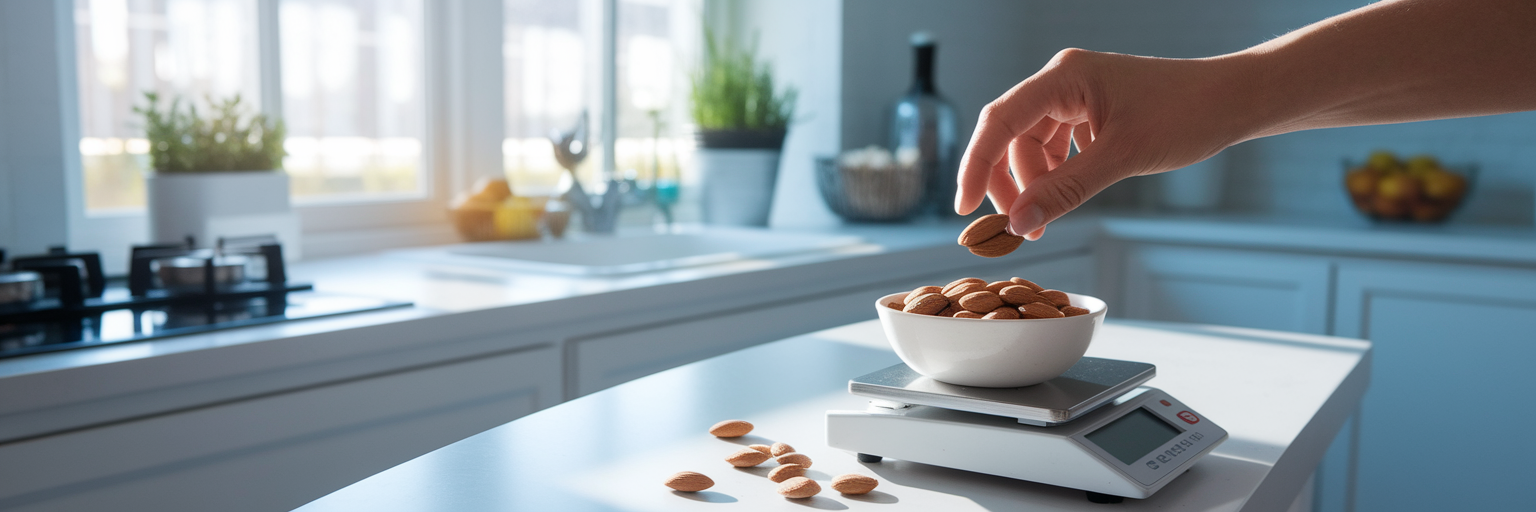
| 'A handful of almonds' | 'Log one ounce of almonds' | 'Handful' is subjective; 'one ounce' is a standard, measurable unit. |
| 'Chicken salad for lunch' | 'Log a salad with 4 ounces of grilled chicken, two tablespoons of ranch dressing, and one cup of mixed greens' | Accounts for 'hidden' calories in dressings and specifies protein portion. |
| 'A splash of milk in my coffee' | 'Log two tablespoons of whole milk' | Defines the exact amount and type of milk, avoiding underestimation. |
Note: This table illustrates how small changes in phrasing provide the AI with the specific data needed for accurate calorie and macro calculations.
Avoiding Common Calorie Underestimation Traps
Even with the speed of voice logging, accuracy remains paramount. Underestimating calories is a common pitfall that can stall progress. Here are some actionable accurate calorie tracking tips to ensure your logs reflect what you actually eat.
- Specify Your Portions: Ambiguous terms are the enemy of accuracy. Instead of saying "a bit of cheese," use a specific measurement like "one ounce of cheddar cheese." The difference can be dozens of calories. If you don't have a food scale, use standard measuring cups and spoons.
- Always Review Before Saving: Think of the AI's transcription as a draft, not a final entry. Take the extra two seconds to glance at the screen and confirm the quantities and items are correct before you save. This simple check prevents small errors from compounding over time.
- Log the 'Extras': It's easy to forget the calories that come from cooking oils, butter, salad dressings, and sauces. These are calorie-dense and can quickly add up. Make it a habit to explicitly mention them in your voice command, such as "Log one tablespoon of olive oil."
- Estimate with Visual Cues: When a scale isn't available, use common objects for reference. A deck of cards is roughly the size of a 3-ounce serving of meat, and a golf ball is about two tablespoons. These visual guides help you make more informed estimates on the go. The goal is to provide the tool with enough detail to generate precise nutrition insights, which is the core function of a dedicated tool like Saylo AI.
Building a Consistent Logging Habit with Voice

The less effort a task requires, the more likely it is to become an automatic habit. This is where the low-friction nature of voice commands truly shines. By removing the tedious steps of manual entry, voice logging makes consistency feel natural rather than forced.
A powerful technique to solidify this routine is "habit stacking." Simply tie the action of logging your meal to something you already do without thinking, like clearing your plate after eating. The sequence becomes: finish meal, clear plate, log meal. This creates a powerful trigger that reinforces the behavior. A fast meal tracking app also creates a positive reinforcement loop. Seeing immediate nutritional feedback without the usual hassle provides a sense of accomplishment and control, motivating you to continue.
Beyond speed, trust is essential for building a daily habit. Many people feel a subtle anxiety about where their health data is going. Systems designed for on-device processing remove this friction entirely. When an app requires no accounts and sends no personal data to servers, it fosters a deeper level of trust. This is the principle behind a privacy-first fast meal tracking app that operates entirely on your device, ensuring your data remains yours alone.
Current Challenges and the Future of Meal Logging
While voice logging has made significant strides, it's important to acknowledge the limitations of many current platforms. Most still require an active internet connection to send your voice to a server for processing. This can be inconvenient when you're offline or have a poor signal. Furthermore, many are limited to English and tailored primarily for the U.S. market.
This is where the next evolution of meal logging is taking shape: on-device AI processing. This advancement eliminates the need for an internet connection entirely. More importantly, it dramatically enhances user privacy by ensuring your voice data never leaves your phone. There are no recordings sent to the cloud and no personal information is shared.
This shift is more than just a technical upgrade. It represents the future of how to log meals with voice—a move toward truly seamless, secure, and user-centric tools. When your health data is processed and stored only on your device, you regain full control and ownership. This evolution represents the future of personal health management, where tools like Saylo AI are built with the user's privacy and convenience as the primary focus.