

The Challenge of Tracking Homemade Food
We've all been there. You cook a delicious meal at home, proud of using fresh ingredients, only to face the daunting question of how to track calories in homemade food. Unlike a packaged snack with a clear nutrition label printed on the side, your hearty beef chili or creamy chicken casserole is a mystery box of inputs. This is where "calorie creep" begins, often without us even noticing.
Think about the small, automatic additions in American home cooking. It’s the two tablespoons of olive oil you pour into the pan to sauté onions, the generous handful of shredded cheddar sprinkled over tacos, or the hidden sugar in a store-bought pasta sauce. Each one seems insignificant on its own, but together they can add hundreds of calories to your daily intake.
Now, consider the mental fatigue of logging this manually. You have to stop what you're doing, pull out your phone, and search for each component. You find yourself typing "onion, raw, chopped," then guessing the amount, and repeating this process for every single ingredient. It turns a relaxing cooking experience into a tedious chore, which is a primary reason why so many of us give up on tracking altogether. This complexity demands a more intuitive method that captures the details without causing burnout.
The Speed and Simplicity of Voice Logging
Responding directly to the friction of manual entry, voice logging offers a refreshingly simple alternative. Its power lies in speed and how seamlessly it integrates into your daily routine. Instead of interrupting your workflow, it becomes part of it. Some analyses show that logging a meal with your voice can be 40 to 60 seconds faster per entry than typing, a time savings that adds up significantly throughout the day.
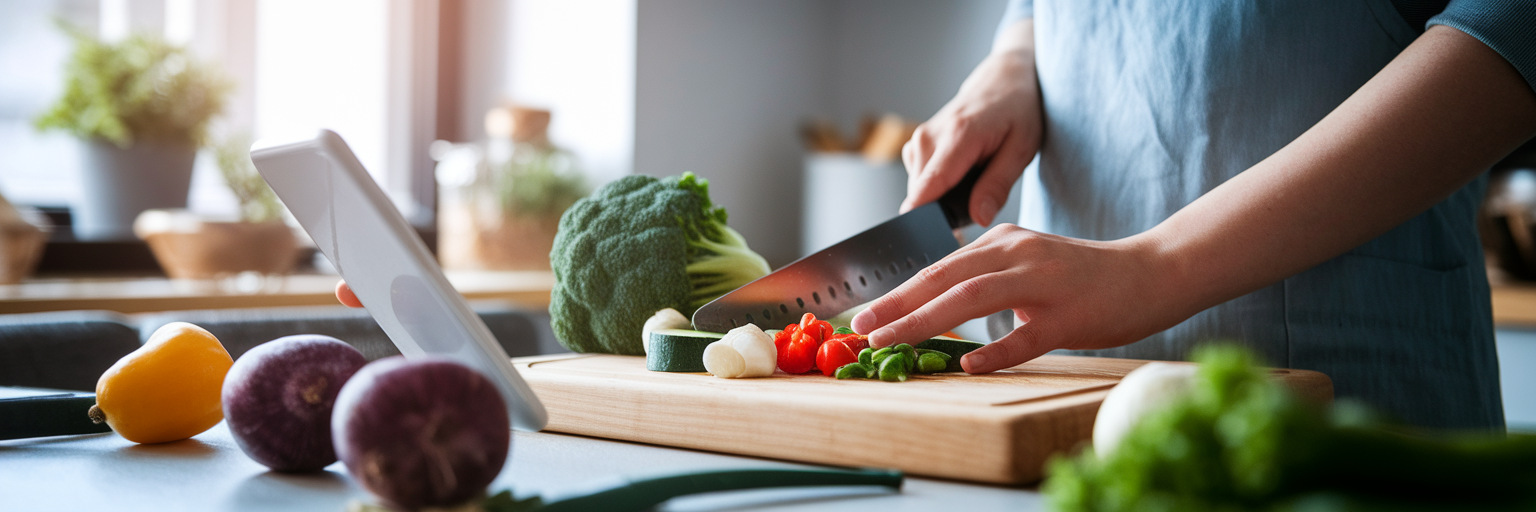
Imagine you’ve just finished a meal. Rather than pecking at a tiny keyboard, you can simply say, "I had a bowl of chili with sour cream and a side of cornbread." The technology parses the sentence, identifies the foods, and logs the data instantly. This hands-free approach is a huge advantage, especially when you’re multitasking. You can log ingredients while chopping vegetables or record your dinner while cleaning up the kitchen. This "in-the-moment" tracking ensures that small but important details are not forgotten later.
This experience stands in stark contrast to the disruptive nature of stopping everything to type on a phone. Speaking is a natural action, and by making logging feel just as natural, it helps build a sustainable habit. A dedicated voice calorie tracker app is designed to fit into your life, not interrupt it. According to a review on heypeony.com, this hands-free method is particularly effective for logging whole foods and receiving detailed nutritional breakdowns without the usual hassle.
Deconstructing Complex Meals for Accurate Logging
With a more intuitive tool in hand, the next step is learning how to use it effectively for complex homemade dishes. The key is to break down the recipe into its core components as you go. This method transforms a seemingly overwhelming task into a series of simple, manageable steps.
Here’s a practical approach to deconstructing your meals for an AI nutrition tracker:
- Log ingredients as you cook. As you add each item to the pot or pan, speak it aloud. For example, say, "add one tablespoon of olive oil," followed by, "add one yellow onion, chopped." This captures foundational calories that are easy to forget later.
- Handle batch cooking efficiently. When you make a large recipe like a stew or soup, log all the ingredients for the entire batch. Then, when you eat a serving, you can simply log the portion, such as, "one cup of my homemade beef stew."
- Describe your cooking methods. Specificity matters. Saying "pan-fried chicken breast" instead of just "chicken breast" allows the system to account for the oil or butter used in frying, giving you a more accurate calorie count.
- Create custom meals for repeats. Once you log a full recipe, you can often save it as a custom meal. The next time you make it, you can just say, "had my Tuesday night tacos," and the system will recall all the ingredients for you.
This process shows how voice logging makes tracking even the most intricate meals not just possible, but straightforward.
| Action | Spoken Voice Command | Why It Improves Accuracy |
|---|---|---|
| Sautéing the base | 'Add one tablespoon olive oil, one chopped onion, two cloves garlic' | Captures the 'hidden' calories from cooking oil. |
| Adding protein | 'Add one pound of 90/10 ground beef' | Specifying the fat percentage provides more precise data. |
| Adding canned goods | 'Add one 28-ounce can of crushed tomatoes and one can of kidney beans, drained' | Notes like 'drained' help the AI exclude liquid from calorie counts. |
| Adding spices & extras | 'Add two tablespoons chili powder, one teaspoon cumin, and two tablespoons brown sugar' | Includes easily forgotten sources of calories and carbs like sugar. |
| Logging a portion | 'I had one and a half cups of the chili with a dollop of sour cream' | Logs the final portion size and toppings accurately. |
Using AI to Refine Portion Size Estimates
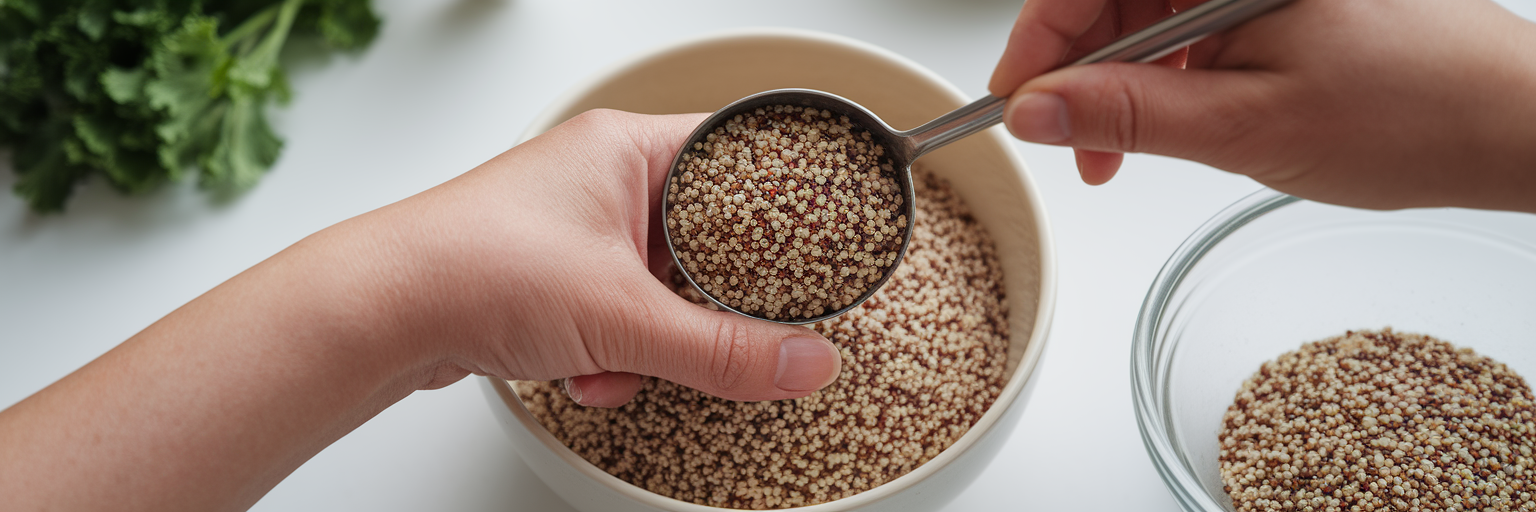
Even with the best logging technique, one major hurdle remains: portion size. Let’s be honest, most of us are not great at eyeballing measurements. This is often the single biggest point of failure in calorie tracking. Fortunately, you don’t need a food scale for every meal to estimate portion sizes accurately. You can use simple, accessible references that are always with you.
Here are a few practical methods for better estimation:
- Use your hand as a guide. Your hand is a surprisingly consistent measurement tool. A closed fist is about one cup, the palm of your hand is roughly 3-4 ounces of protein, and the tip of your thumb is about one tablespoon.
- Use common objects for comparison. A deck of cards is a great visual for a 3-ounce serving of meat. A baseball is about the size of one cup of rice or pasta.
- Speak your estimate naturally. Instead of trying to convert your estimate to grams, just say what you see. You can log "a palm-sized portion of salmon" or "a handful of almonds," and let the technology do the work.
This is where modern AI-powered tools truly shine. They are designed to understand these natural language phrases and convert them into standardized measurements, giving you a reliable nutritional breakdown. As discussed in an article by Life IV Weight Loss, AI is increasingly used to analyze meals and improve tracking accuracy. While emerging technologies like photo-based estimation exist, voice remains a more immediate and private alternative, as it doesn’t require you to send personal images of your food to a server. This empowers you with simple techniques that deliver surprisingly precise results.
Why Data Privacy Matters in Your Health Journey
As we rely more on technology to manage our health, it’s important to ask: where is all this information going? Your dietary data is incredibly sensitive. It reveals your habits, your health status, and your lifestyle. Many apps require you to create an account, collecting your meal logs and storing them on company servers where they can be used for analytics, sold to third parties, or exposed in a data breach.
This is where a commitment to privacy becomes non-negotiable. We believe you shouldn't have to trade your personal data for a health tool. That’s why some modern apps are built with a "100% on-device" architecture. This means that everything—from voice recognition to data analysis and storage—happens locally on your phone. No meal logs, audio clips, or personal information ever leave your device.
When choosing a health app, scrutinize its privacy policy. Be wary of any service that requires an account just to function, as that often means your data is being synced to a server you don't control. A truly private calorie counting app puts you in complete control of your information. Your health journey is personal, and your data should remain that way. It’s a standard of trust we believe every user deserves.
Making Voice Logging a Daily Habit

The best tracking tool is the one you use consistently. The real goal is to make logging feel so effortless that it becomes a natural part of your day. Instead of relying on willpower, you can build a sustainable habit by integrating voice logging into your existing routines.
Here are a few tips to make it stick:
- Habit Stacking: Link voice logging to something you already do every day. For example, log your breakfast while your coffee brews in the morning, or log your dinner while you load the dishwasher at night.
- Consistency Over Perfection: Don't get bogged down trying to be perfect. A good estimate logged consistently is far more valuable for identifying trends than a few perfectly measured but sporadic entries. The goal is progress, not perfection.
- Pre-logging for Meal Prep: If you prepare meals in advance, log the ingredients for one container right after you make it. Then, each day, you can simply confirm you ate it with a quick voice command.
Ultimately, the aim is to build a system that works for you without adding stress to your life. By making the process nearly effortless, voice logging removes the biggest barrier to tracking—friction. This empowers you to stay consistent, gain the insights you need, and finally achieve your health goals with confidence.