

The Hidden Costs of Free Nutrition Apps
There's a well-known axiom in the digital world: if a service is free, you are likely the product. This principle is especially true in the health and wellness app market, where your personal dietary data has become a valuable commodity. Many popular nutrition apps offer their services at no cost by collecting, analyzing, and often monetizing your most sensitive information. For a busy professional, the privacy risks are more than just theoretical.
Imagine your daily food logs, exercise habits, and even meal times being collected and linked directly to your identity. This is the reality of data linkage, a process similar to how a store loyalty card connects your name and address to every purchase you make. In the wrong hands, this information can create real-world vulnerabilities. Data breaches could expose your health habits, and some have raised concerns that such data could one day influence things like insurance premiums.
Even when data is supposedly "anonymized," research has shown it can often be traced back to an individual with surprising accuracy. Your unique pattern of eating, combined with location data from your phone, can create a digital fingerprint that is distinctly yours. This quiet exchange of personal information for a "free" service has created a clear need for a new standard in nutrition tracking. We need tools that deliver powerful insights without demanding your data as payment, such as a truly secure food diary app that puts your privacy first.
Identifying a Genuinely Secure Nutrition Tracker

Choosing an app to manage your health data requires a new level of scrutiny. Instead of just looking at features, it's important to assess an app's commitment to your privacy. A genuinely secure tool empowers you with information without exploiting it. Here are the key indicators to look for.
Key Features of a Privacy-First App
A truly private app is built on a foundation of user control. When evaluating your options, look for these non-negotiable features:
- No Account Requirement: The app should be fully functional without asking for your email, name, or social media login. Your identity should never be a prerequisite for tracking your own meals.
- On-Device Data Storage: Your food logs and personal trends must be stored locally and encrypted on your phone, not on a company's servers where they could be accessed or breached.
- Transparent Privacy Policy: Look for a policy written in plain English that explicitly states your data is never sold, shared, or used for advertising. Vague language is a red flag.
How to Read Apple's Privacy Nutrition Labels
Apple’s App Store provides a quick screening tool with its Privacy Nutrition Labels. Think of them as an ingredient list for data. Pay close attention to two sections: "Data Used to Track You," which indicates if the app shares your data with other companies for advertising, and "Data Linked to You," which shows what information is tied to your identity. As explained by the mobile marketing platform Adjust, these labels are designed to give users a transparent look into an app's data practices. An app with minimal or no entries in these categories is a strong candidate for private nutrition tracking.
The Gold Standard: On-Device Processing
The ultimate guarantee of privacy is on-device processing. When an app handles all its calculations, from speech recognition to nutrition analysis, directly on your device, it structurally eliminates the risk of your data leaving your control. There are no servers to hack and no data transmissions to intercept. An on-device nutrition app ensures that your health journey remains completely yours. This architecture isn't just a feature; it's a commitment to your security.
| Feature | Privacy-First Tracker (e.g., On-Device) | Conventional Tracker (Cloud-Based) |
|---|---|---|
| Data Storage | Locally on your device, encrypted | On company servers, often in the cloud |
| Account Requirement | None; operates anonymously | Mandatory (email, social login) |
| Business Model | One-time purchase or subscription | Often free, supported by data monetization or ads |
| Data Sharing | No data is collected or shared | Data may be sold to brokers or used for targeted ads |
| Vulnerability | Limited to physical device access | Exposed to server-side breaches and unauthorized access |
Note: This table contrasts the fundamental architectural and business model differences that determine an app's privacy posture. Users should assess which model aligns with their personal data security standards.
Time-Saving Logging for a Demanding Schedule
We can all picture the moment: you finish a meal and pull out your phone to log it, only to be met with endless scrolling through databases, guessing portion sizes, and manually typing every ingredient. This friction is the number one reason people give up on tracking their nutrition. For a busy professional, time is the most limited resource, and a tedious logging process simply isn't sustainable. Modern tools, however, have made this process remarkably efficient.
Here are a few strategies to reclaim your time without sacrificing accuracy:
- Leverage Voice Logging: This is by far the fastest way to log meals, especially when you are on the move. Imagine walking from a lunch meeting back to the office and simply saying, "I had a chicken salad with olive oil dressing and a black coffee." A voice calorie tracker can parse that sentence in seconds and have your meal logged before you even reach your desk.
- Use Barcode and Label Scanning: For packaged foods, manual entry is obsolete. A quick scan of a product's barcode with your phone's camera can instantly pull all the nutritional information, from calories to macronutrients, directly into your log.
- Utilize AI-Powered Suggestions: An intelligent app learns your habits. If you have the same protein shake every morning, the app should suggest it as soon as you open it at 8 AM. This reduces logging recurring meals to a single tap, turning a repetitive chore into an effortless check-in.
These methods transform nutrition tracking from a data entry task into a seamless part of your day, making consistency achievable even with the most demanding schedule.
Building Consistent Tracking Habits Securely
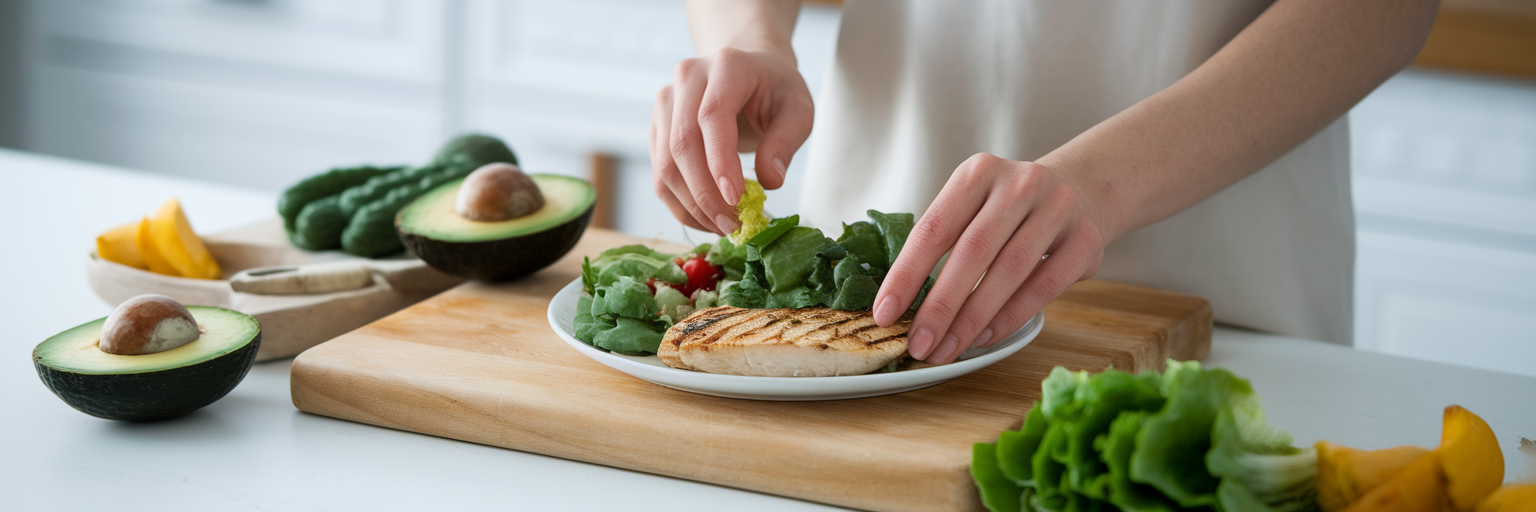
The right tools are only half the equation. The other half is building a sustainable habit, and your sense of privacy plays a surprisingly large role in that. The goal is not short-term perfection but long-term consistency. If you are just starting, try tracking only one meal a day, like breakfast, for a week. This small win builds momentum.
Another effective strategy for a packed schedule is "batch logging." Instead of logging after every meal, set aside two minutes at the end of your day to log everything at once. Using a fast input method like voice makes this incredibly efficient. You can simply recount your day's meals in a few sentences and let the technology do the work.
Here is where privacy becomes a powerful motivator. When you know a third party is not analyzing your every choice, the psychological burden of being monitored disappears. This removes the "performance anxiety" that can lead to dishonest logging or giving up entirely. A private tracker is for your eyes only, making it a judgment-free tool for self-awareness. The ideal nutrition tracker for busy professionals is one that adapts to your life, not the other way around. By removing friction and ensuring privacy, it becomes far easier to form a lasting habit. If you have questions about implementing these strategies, you can always reach out for guidance.
Focusing on Trends Over Trivial Details
Many people fall into the trap of obsessive tracking, getting lost in counting every single calorie or gram of sugar. For a busy professional, this level of detail is not only stressful but also counterproductive. The real value of tracking lies in identifying high-level patterns over time. Are you consistently getting enough protein to support your workouts? Do your weekend habits derail your weekday progress? Is your meal timing affecting your energy levels?
A private, on-device tool naturally encourages this healthier perspective. Since the data is yours alone, it serves as a personal feedback loop for insight, not a rigid report card to be judged. There is no external pressure to hit "perfect" numbers every day. Instead, you can focus on making gradual, informed adjustments based on your own trends.
Ultimately, learning how to track calories privately is about more than just security. It is the foundation for building a sustainable health practice that reduces stress, not adds to it. Use tracking as a tool for self-awareness, and you will be better equipped to achieve your long-term goals.