
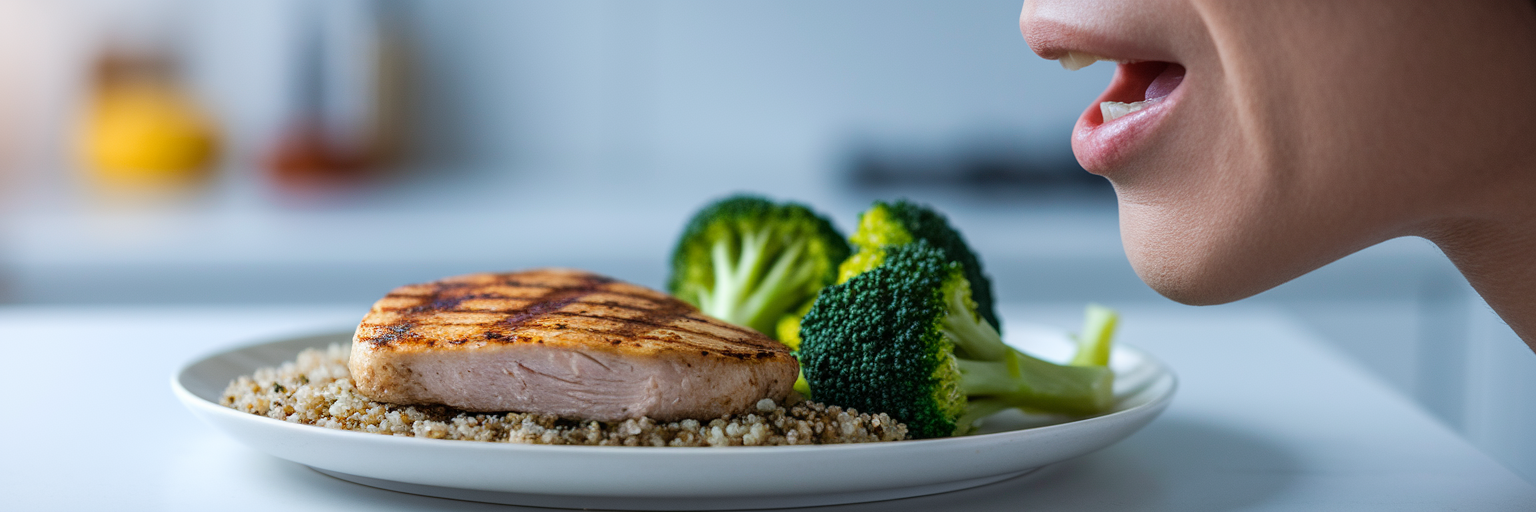
Many people who start tracking their diet give up within a few weeks. The main reason is simple: friction. The tedious cycle of searching for foods, estimating portions, and manually entering every detail can feel like a second job. This is where the process often breaks down, not from a lack of motivation, but from sheer exhaustion with the method.
Why Voice Logging Eases Calorie Tracking
Voice logging transforms this chore into a simple, conversational act. Instead of wrestling with menus and search bars, you just speak. This shift from typing to talking removes the biggest barrier to consistency. It’s the difference between filling out a form and having a quick chat. For anyone focused on low-calorie diet tracking, this ease of use is critical for long-term success.
Dietitians often observe that the most successful clients are the ones who log their meals consistently. Voice logging makes that consistency achievable. When tracking is effortless, it becomes a natural part of your routine rather than an interruption. This is where you find a frictionless, voice-first logging experience that supports your goals instead of complicating them. The accuracy of these systems is part of a larger movement toward AI-driven healthcare innovation, making personal health management more intuitive.
Perhaps the most powerful aspect is the immediate feedback. When you say, “I had a turkey sandwich on whole wheat with lettuce and tomato,” and instantly see the calorie and macro breakdown, you create a powerful learning loop. This instant insight helps you connect what you eat with its nutritional impact in real time. It makes nutrition tracking without typing not just a convenience, but a genuine educational tool that empowers smarter choices throughout your day.
Getting Started with Voice Meal Logging

Using a voice command calorie tracker feels intuitive because it mimics how we naturally think about food. You don’t need to learn a special code or syntax. However, a few best practices can help you get the most accurate results right from the start. Think of it less as giving commands and more as clearly describing your meal.
Here is a simple guide on how to log meals by voice effectively:
- Be Specific with Your Descriptions. The more detail you provide, the more accurate the calorie count will be. Instead of saying “a bowl of oatmeal,” try “one cup of cooked oatmeal with a tablespoon of brown sugar and a quarter cup of blueberries.” Specificity removes ambiguity and gives the AI the information it needs to deliver a precise analysis.
- Log Meals as You Eat Them. We’ve all had that moment at the end of the day, trying to remember what we had for lunch. Was it a side salad or fries? Voice logging is so fast that you can log your meal before the plate is even cleared. This real-time entry prevents forgotten ingredients and ensures your daily total is correct.
- Briefly Review the AI’s Interpretation. Modern AI is remarkably accurate, but it’s always wise to give the entry a quick glance. Think of it as a partnership. The AI does the heavy lifting of searching the database and calculating the numbers, while you provide the final confirmation. This quick check ensures every entry aligns perfectly with your meal.
- Describe Entire Meals Naturally. You don’t have to log each item one by one. Feel free to describe your whole plate in a single sentence. For example, saying “For dinner, I had six ounces of grilled salmon, a cup of roasted broccoli, and a half cup of quinoa” is a perfectly natural and effective way to log. The system is designed to parse these details for you.
Common Pitfalls and How to Avoid Them
While voice logging simplifies tracking, a few common habits can undermine its accuracy. Being aware of these potential slip-ups helps you build a reliable food journal, which is the foundation of any successful diet plan. Addressing them head-on ensures your data is a true reflection of what you consume.
Vague Food Descriptions
The single biggest source of error in any form of calorie tracking is ambiguity. “Chicken salad” can mean very different things depending on preparation, and the calorie difference can be significant. The solution is to add just a few more descriptive words. Think about preparation method (grilled vs. fried), key ingredients (like dressings or cheese), and quantity.
| Vague Description | Specific Description | Potential Calorie Difference |
|---|---|---|
| A bowl of cereal | 1.5 cups of Cheerios with 1 cup of 2% milk | ~150 calories |
| Chicken salad | 6 oz grilled chicken breast on 2 cups of romaine with 2 tbsp Caesar dressing | ~200 calories |
| Coffee | A large latte with whole milk and two pumps of vanilla syrup | ~250 calories |
| A handful of nuts | 1/4 cup (1 oz) of roasted, salted almonds | ~100 calories |
Note: Calorie differences are estimates and can vary based on specific brands and preparation methods. The table illustrates the importance of detail for accurate tracking.
AI Misinterpretations and Database Errors
Even the best AI can occasionally mishear a word, especially if there’s background noise like a television or a busy café. Always give the logged entry a quick scan to make sure “kale salad” wasn’t interpreted as “cake salad.” If you find an error, most apps allow for a quick text edit to correct it.
Forgetting Condiments, Oils, and Drinks
A tablespoon of olive oil, a few pats of butter, the cream in your coffee, or a glass of juice—these items are easy to overlook but can add hundreds of calories to your day. Make it a habit to include them in your voice log. Think of them as ingredients, not afterthoughts. Logging “two scrambled eggs cooked with a teaspoon of butter” is far more accurate than just “two scrambled eggs.”
Inconsistent Portion Size Estimation
Estimating portion sizes is a common challenge. For ultimate precision, a food scale is an invaluable tool, especially when you’re starting out. Over time, you can learn to use visual cues: a deck of cards for a 3-ounce serving of meat, a tennis ball for a cup of pasta, or your thumb tip for a teaspoon of oil. As MyFitnessPal’s food-logging expert Daisy Waanders, RD, notes, a consistently accurate food journal is a highly effective weight-loss strategy.
Staying Consistent Without Feeling Restricted

The goal of tracking is not perfection; it is consistency. Missing a day or forgetting a snack doesn’t mean you’ve failed. The real challenge is sticking with it long enough to see patterns and make meaningful adjustments. Unfortunately, many apps create their own barriers, such as requiring an internet connection to log a meal or placing essential features behind a paywall. These small frustrations can make it harder to stay on track.
This is where a privacy-focused diet app built on a different philosophy can make all the difference. When your data is processed and stored only on your device, you regain control. There are no accounts to create and no personal information sent to a server. This approach builds trust and removes technical hurdles. For instance, apps that operate fully on-device ensure your log is always accessible, whether you have a signal or not.
An easy meal logging app should work for you, not the other way around. Here are a few principles for staying consistent:
- Focus on the Habit, Not the Numbers. In the beginning, just focus on logging every meal. Don't judge the calories. The simple act of consistent tracking is the first victory.
- Use a Tool That Respects Your Privacy. Knowing your personal health data isn't being collected or sold provides peace of mind, making the experience feel safer and more personal.
- Log Anywhere, Anytime. Whether you're on a flight, camping, or just in an area with poor reception, the tool is always available. This reliability removes any excuse for not logging.
Ultimately, your food log is not a report card. It is a private, personal dataset that helps you understand your own habits. It empowers you to see where you can make small, sustainable changes, turning tracking from a source of stress into a tool for self-awareness.
The Future of Voice-Powered Nutrition
Voice logging is more than just a convenient feature; it represents a fundamental shift in how we interact with our health data. As the technology continues to mature, the experience will only become more seamless and integrated into our daily lives.
We can expect ongoing improvements in Natural Language Processing, allowing AI to understand even more complex and conversational meal descriptions with greater accuracy. Imagine an app that understands context, like brand names or restaurant-specific menu items, just from your voice. This smarter AI will further reduce the effort required from the user.
Accessibility will also expand. As on-device models become more powerful and efficient, voice logging is likely to become a standard, free feature in health apps, not a premium add-on. This will make powerful nutrition tools available to everyone, regardless of their budget. Finally, the future points toward effortless integration with other data sources, like wearables, to provide a more holistic and automated view of your health without constant manual input.