
The Challenge of Tracking Nutrition on the Road
Travel disrupts routines. It’s a simple fact. The disciplined rhythm of home life gives way to unpredictable schedules, new foods, and social gatherings. For anyone focused on their health, this shift presents a significant challenge, especially when it comes to nutrition tracking on vacation. The friction begins the moment you sit down for your first meal away from home.
Manual tracking apps, useful in a controlled environment, become cumbersome on the road. You find yourself endlessly scrolling through databases, trying to find an entry that vaguely matches the restaurant’s unique dish. We’ve all been there, discreetly typing ingredients into our phone under the table, feeling more like a data entry clerk than someone enjoying a meal. This process is not just tedious; it’s often inaccurate, relying on guesswork and memory long after the plate is cleared.
This initial frustration often snowballs. A few missed entries can trigger an "all or nothing" mindset, where the effort of tracking feels greater than the benefit. The goal of staying consistent is abandoned, replaced with a promise to "get back on track" after the trip. The problem isn’t a lack of discipline but the impracticality of the tools we use in a dynamic travel setting.
Voice Logging for Seamless Travel Tracking

Addressing the friction of manual entry requires a tool that moves at the speed of conversation. This is where voice logging changes the entire experience. Instead of tapping and searching, you simply speak. A command like, "I had a six-ounce grilled salmon with a cup of roasted asparagus," captures the meal accurately in seconds. This simple action replaces a multi-step process of searching for salmon, selecting a portion size, then repeating the process for the asparagus.
The ability to log food with voice in the moment is its greatest strength. It eliminates the memory gaps and estimation errors that happen when you wait until the end of the day to log your meals. It’s also discreet. You can log your meal with a quick voice note while walking back to your hotel, without pulling you out of the social moment at the dinner table. This seamless integration makes consistency feel effortless rather than a chore.
Behind this simplicity is AI technology that interprets natural language and converts it into precise nutritional data. This isn't a niche concept; it reflects a broader shift in how we interact with technology during travel. As reported by PYMNTS, major companies like Priceline are now using AI-powered voice technology for real-time assistance. Using a voice calorie tracker app applies that same principle of conversational efficiency to your personal health goals, making it a modern tool for a modern traveler.
Managing Inconsistent Restaurant Meals
One of the biggest questions about how to track macros traveling is handling unfamiliar restaurant meals. Without a nutrition label, accuracy can feel impossible. The key is to shift from seeking perfection to applying smart estimation techniques. A few practical strategies can make a significant difference.
First, use visual cues to estimate portion sizes. A deck of cards is roughly the size of a three-ounce serving of meat, while your fist is about one cup. Second, review menus online before you arrive. A few minutes of planning helps you make informed choices instead of impulsive ones. Most importantly, learn to deconstruct complex dishes into their core components. Instead of searching for "chicken caesar salad," log the individual ingredients. A well-reasoned estimate is always better than not logging at all.
This deconstruction method provides a much clearer picture of your macro intake. With an advanced tool like our app, you can log all these components in a single, simple voice command.
| Dish Component | Voice Log Command Example | Reasoning |
|---|---|---|
| Chicken Breast | 'Six ounces of grilled chicken breast' | Isolates the primary protein source. |
| Romaine Lettuce | 'Two cups of romaine lettuce' | Accounts for the vegetable base. |
| Croutons | 'A quarter cup of croutons' | Captures the main carbohydrate source. |
| Parmesan Cheese | 'Two tablespoons of shaved parmesan' | Adds the primary fat and flavor source. |
| Caesar Dressing | 'Two tablespoons of Caesar dressing' | Logs oils and fats that significantly impact calories. |
The Privacy Advantage of On-Device Tracking Abroad
When you travel, you often rely on public Wi-Fi at airports, cafes, and hotels. While convenient, these networks can expose your personal data. Many health apps require you to log into an account and sync your meal data with their servers, transmitting sensitive information over potentially unsecured networks. This creates a vulnerability that privacy-conscious individuals should not have to accept.
A private nutrition tracker that operates entirely on-device eliminates this risk. When your data is processed and stored locally in an encrypted database, nothing is ever sent to a server. There is no data transmission to intercept. This design also means the app works perfectly offline, a huge advantage when traveling internationally where mobile data can be expensive or unreliable. You can continue logging meals on a long flight or in a remote location without interruption.
The peace of mind that comes from this approach is significant. With a system like ours, there are no accounts to create and no cloud servers to sync with. Your dietary habits, personal preferences, and health data remain exactly where they belong: with you. It’s the digital equivalent of keeping your passport in your own pocket instead of handing it over to a stranger.
Practical Strategies for Staying on Goal
A powerful tracking tool is only one part of the equation. Success also depends on your mindset and preparation. A few practical strategies can help you stay consistent without sacrificing the enjoyment of your trip. These macro tracking tips for travel are designed to be simple and sustainable.
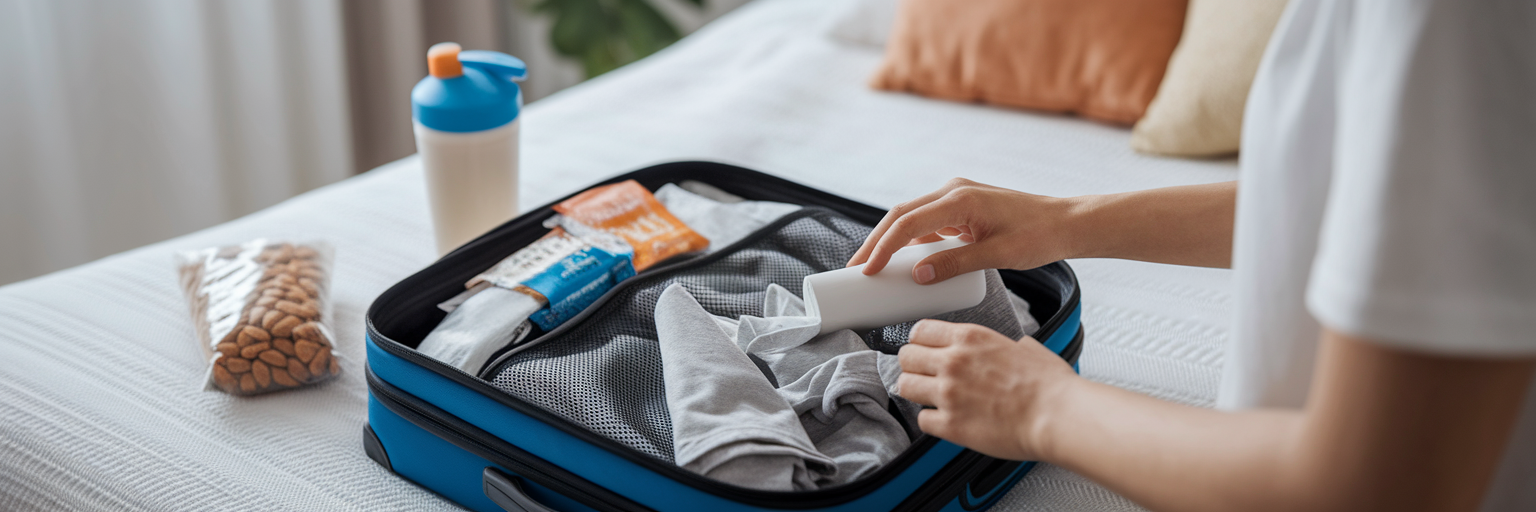
- Pack smart snacks. Bring non-perishable, macro-friendly options like protein bars, jerky, or nuts. This helps you avoid making poor food choices when you're hungry and options are limited.
- Prioritize protein and hydration. At every meal, build your plate around a quality protein source. It promotes satiety and helps preserve muscle mass. Staying hydrated is equally important for managing hunger and energy levels.
- Embrace the 80/20 rule. Aim for consistency, not perfection. Follow your plan 80% of the time, and use the other 20% to enjoy local specialties without guilt. This balance prevents burnout and makes the process more enjoyable.
- Set realistic travel goals. A vacation may not be the best time to aim for aggressive fat loss. Shifting your goal to maintenance can reduce stress and set you up for a successful trip where you return home feeling refreshed, not defeated.