
The Foundation of Effective Macro Tracking
In the United States, millions of people use apps to monitor their diet, yet many stop at just counting calories. This approach is like trying to understand a complex story by only reading every tenth word. To truly understand your body’s needs, you need to look at the full picture: macronutrients.
Your body runs on three core macronutrients. Protein is the building block for repairing tissues and muscle. Carbohydrates are your primary source of immediate energy, fueling your brain and workouts. Fats are essential for hormone production and absorbing vital nutrients. Understanding this trio is the real 'why' behind effective nutrition management.
Learning how to track macros offers benefits far beyond weight management. It can help you stabilize energy levels, eliminating that familiar afternoon slump. For athletes, it’s about fine-tuning fuel for peak performance. For everyone else, it builds a more intuitive connection with your body, helping you understand what it needs to feel its best.
However, none of these benefits are possible without one non-negotiable element: accuracy. Without precise data, any adjustments you make are just guesswork. You might as well be navigating a new city without a map. Effective tracking requires both the right techniques and the right tools, especially tools that respect your personal goals, including the fundamental need for data privacy.
Core Techniques for Accurate Food Logging
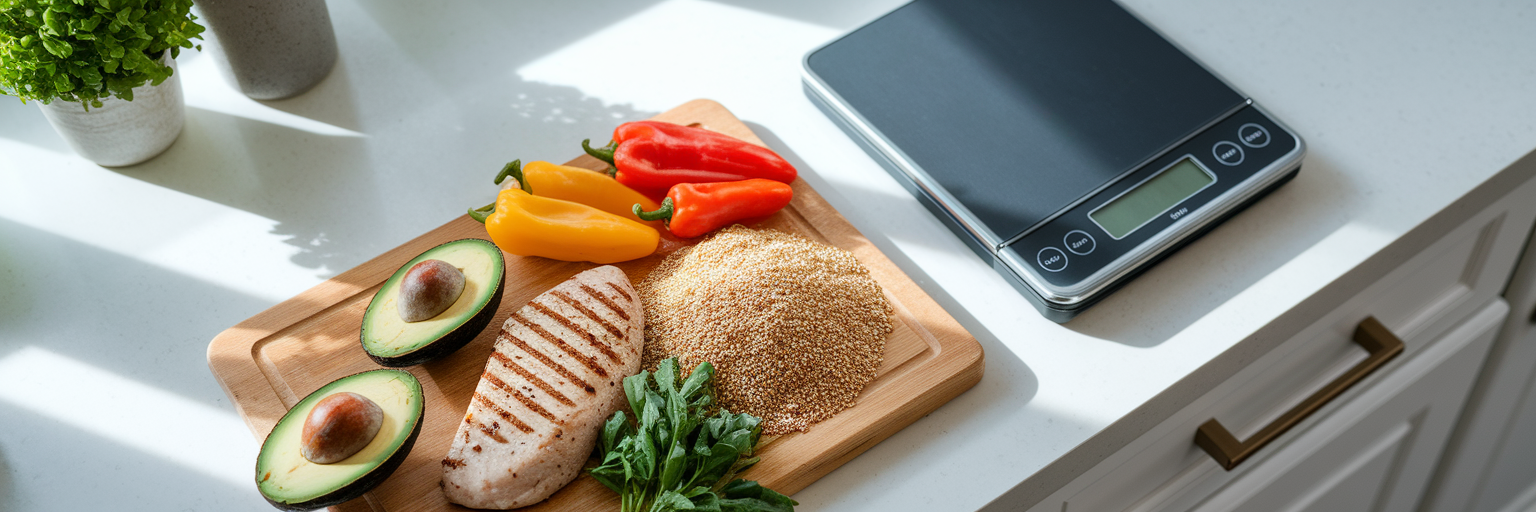
Once you understand the importance of accuracy, the next step is mastering the 'how' of precise food logging. This begins with embracing one simple tool: the digital food scale. While using measuring cups and spoons feels convenient, their accuracy can vary wildly depending on how you pack ingredients. As nutrition experts at Factor75 highlight, precision is critical for seeing results. A food scale removes all ambiguity.
Logging a complex homemade meal might seem daunting, but a systematic approach makes it simple. Here’s a straightforward strategy:
- Weigh each raw ingredient individually before you start cooking.
- Log each of those items in your tracker.
- Once the dish is fully cooked, weigh the entire final meal.
- When you serve yourself a portion, weigh just your serving. You can then calculate its percentage of the total weight to get a highly accurate macro count for your specific portion.
Beyond the scale, a few other macro tracking tips can help build consistency. Try logging your meals immediately after eating, while the details are still fresh. Some people find success by pre-logging their entire day’s food in the morning, which also helps with meal planning. Set a daily reminder on your phone if you tend to forget.
Many apps feature barcode scanners, which are undeniably handy for packaged foods. However, it’s wise to approach them with a bit of caution. These databases are often built on community-submitted data, which can contain errors or outdated information. Always double-check the nutrition facts against the physical label to ensure your log remains accurate.
What 'Privacy-First' Means for Your Health Data

When you log a meal, you’re creating a data point about your health, habits, and lifestyle. The question is, who holds that information? This is where the distinction between cloud-based and on-device apps becomes critical. A privacy first nutrition app is built on the principle that your data belongs to you and should never leave your control.
Most nutrition apps are cloud-based, meaning your meal logs are sent to and stored on company servers. An on-device nutrition app works differently, processing and storing everything locally on your phone. Think of it this way: a cloud app is like a public blog post stored on a third-party server, accessible to others. An on-device app is like a physical diary to which only you hold the key.
| Feature | Cloud-Based Apps | On-Device Apps |
|---|---|---|
| Data Storage | On company or third-party servers | Locally on your phone |
| Privacy Risk | Vulnerable to server breaches, data selling | Data remains in your control |
| Account Requirement | Almost always required (email, social login) | Often not required |
| Offline Functionality | Limited or non-existent | Fully functional without an internet connection |
When evaluating an app, watch for these red flags in their privacy policy:
- Vague language about using "aggregated data" for "research" or "product improvement."
- Clauses that permit sharing your information with marketing partners or third-party advertisers.
- Requests for excessive permissions that aren't essential, like access to your contacts or location.
Truly private apps are built with a philosophy called "privacy-by-design." This means privacy isn't an afterthought; it's woven into the app's core architecture. This privacy-by-design approach prioritizes minimal data collection and often eliminates the need for personal accounts, ensuring your health journey remains yours alone.
Maintaining Consistency with Privacy-Focused Tools
You might wonder how an app's privacy features affect your ability to stick with tracking. The connection is surprisingly direct. A privacy-focused design often creates a better, more sustainable user experience that encourages consistency.
The biggest hurdle to long-term tracking is friction. The more steps it takes to log a meal, the less likely you are to do it. Low-friction methods, like voice or simple text entry, remove these barriers. When you can log your lunch just by speaking a sentence, the process becomes effortless. It’s a faster, more private way to log meals that fits seamlessly into your day, making consistency feel natural rather than like a chore.
Another benefit of a secure calorie tracker is the absence of distractions. Many mainstream apps are cluttered with social feeds, advertisements, and "premium" feature pop-ups designed to capture your attention and data. A clean, utility-driven interface helps you log your food and move on. This reduces the mental fatigue that can lead to burnout, helping you focus on your goals without interruption.
Furthermore, an on-device nutrition app is inherently faster and more responsive. Because it doesn't need to communicate with a remote server to process your entry, logging is instantaneous. You get immediate feedback without waiting for a network connection. This responsiveness makes the entire experience feel more fluid and reliable, especially when you’re on the go. Ultimately, privacy builds trust. When you are confident that your sensitive health data is secure and not being monetized, you can commit to the process without reservation. That trust is the foundation for long-term success.
Actionable Steps to Safeguard Your Nutrition Data

Taking control of your nutrition data is easier than you think. It starts with making conscious choices about the tools you use. Here is a straightforward checklist to help you protect your privacy while pursuing your health goals.
- Review App Permissions: Before and after installing an app, look at what it wants to access. A microphone for voice logging is logical. Access to your contacts, location, or photos is a significant red flag for a nutrition tracker and suggests its motives go beyond helping you track food.
- Choose No-Account Apps: Actively seek out apps that function without requiring an account. This is the simplest way to prevent your personal health data from being linked directly to your identity. If there's no account, there's nothing to breach. You can explore a tracker that puts your privacy first to see how this works in practice.
- Avoid Integrated Social Features: Be cautious of apps that encourage sharing meal diaries or progress on an internal social feed. These features can expose sensitive data to a wider audience than intended and often serve the app's engagement metrics more than your health goals.
- Verify Payment Security: Understand how subscriptions are managed. Trustworthy apps use secure, sandboxed systems like Apple’s or Google’s in-app purchase frameworks. These platforms process payments without sharing your financial details back with the app developer, keeping your payment information secure.