
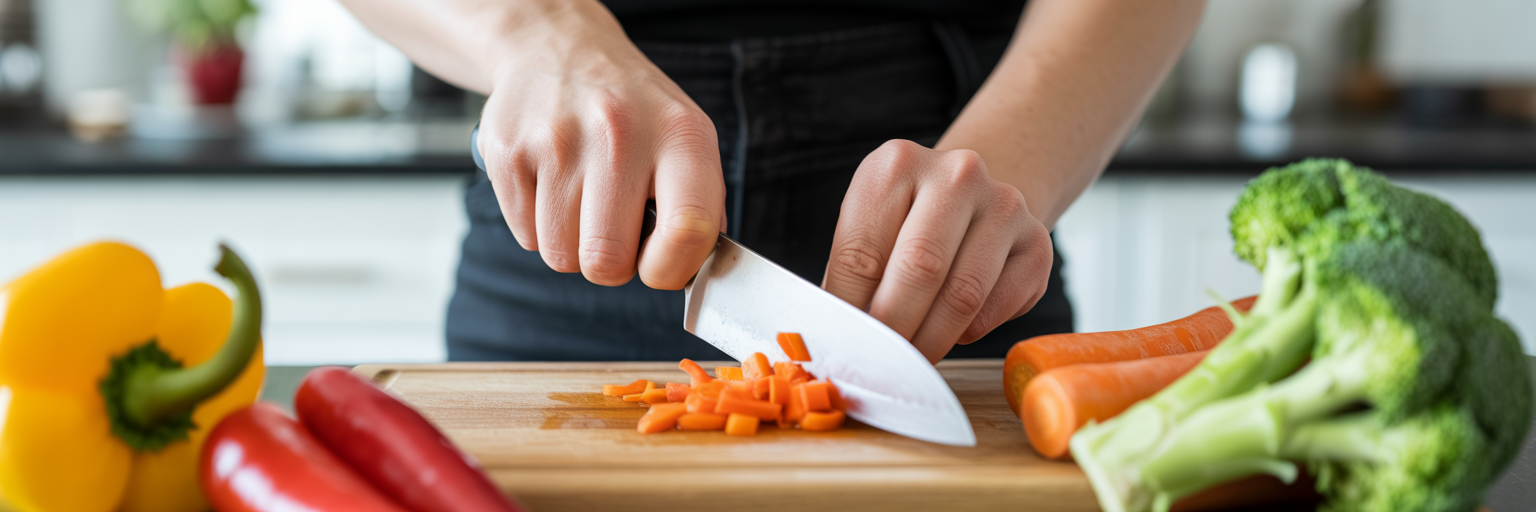
The Daily Challenge of High-Fiber Diet Tracking
It's a well-known fact that over 90% of Americans do not meet the recommended daily intake for dietary fiber, a nutrient essential for digestive health and weight management. This simple statistic highlights a significant gap between knowing what’s good for us and actually doing it. For those actively trying to increase their fiber, the challenge often lies in the tracking itself.
High-fiber diets are built on complex, multi-ingredient meals. Think of a vibrant grain bowl packed with quinoa, black beans, corn, and avocado, or a hearty lentil soup simmering with carrots and celery. While delicious and nourishing, logging these meals manually is notoriously tedious. The process involves searching a database for each individual component, carefully estimating quantities, and piecing it all together. It’s a slow, friction-filled task that can quickly feel like a chore.
This cumbersome process is a primary reason why many people become inconsistent with their food diaries or abandon them altogether. When tracking feels like work, it’s the first thing to go on a busy day. This undermines the very reason for tracking in the first place. Worse, it often leads to inaccurate data, as small but significant fiber sources like a sprinkle of chia seeds or a handful of nuts are easily forgotten. The core problem is clear: traditional methods are poorly suited for the complexity of high-fiber eating, making it difficult to get a true picture of your intake.
How Voice Logging Streamlines Meal Entries
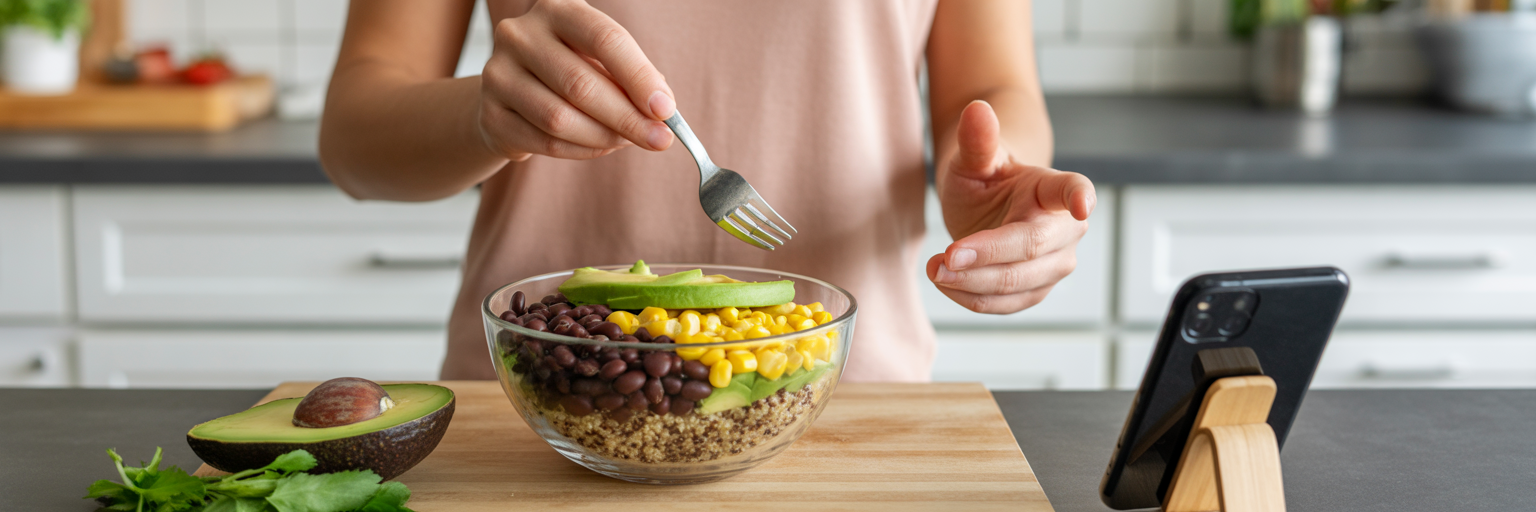
Following the frustrations of manual entry, voice logging for nutrition emerges as a direct and effective solution. It transforms meal tracking from a meticulous, time-consuming task into a quick, conversational action. The technology is designed to understand natural language, allowing you to log what you ate simply by speaking. This fundamentally changes the experience of tracking.
Instead of typing and searching through lists, you can just say, "I had a bowl of oatmeal with a tablespoon of flaxseed and a handful of blueberries." The AI parses each component instantly, capturing the details that are so easy to miss with manual methods. This efficiency is directly linked to consistency. When logging a meal takes only a few seconds, it becomes a sustainable habit rather than an obligation you dread. And consistent data is the foundation of any effective dietary plan.
The hands-free convenience adds another layer of practicality. Whether you’re in the middle of cooking, eating at a restaurant, or managing a busy schedule, you can log your meal without stopping what you’re doing. A modern high fiber diet tracking app like the one we've designed makes this process feel effortless, encouraging the daily use needed to achieve your health goals. It’s a tool that fits into your life, not one that disrupts it.
Practical Techniques for Accurate Fiber Logging
While voice logging simplifies the process, the quality of the output depends on the quality of your input. To truly master how to track fiber intake accurately, a few specific techniques can make a significant difference. These practical tips help the AI understand exactly what you ate, giving you more precise nutritional data.
- Be Specific with Ingredients: Move beyond generic descriptions. Instead of just saying "salad," a more effective log would be, "two cups of spinach with a half-cup of chickpeas, shredded carrots, and two tablespoons of vinaigrette." This level of detail ensures every fiber-rich component is counted.
- Detail Preparation Methods: How a food is cooked can alter its nutritional profile. Specifying "baked sweet potato" versus "fried sweet potato" provides important context that a smart tracker can use to refine its calculations.
- Deconstruct Complex Meals: For homemade dishes like soups, stews, or casseroles, logging the primary ingredients individually yields a far more precise fiber count. For example, log "lentil soup with carrots and celery" to capture the key components.
- Improve Portion Estimation: AI relies on the portion sizes you provide. If you don't have a food scale handy, use simple hand-based measurements as a guide. A clenched fist is about one cup, the tip of your thumb is roughly a teaspoon, and a cupped hand can hold about two tablespoons. These are some of the most effective accurate calorie tracking tips for on-the-go logging.
Just as effective information management strategies help organize complex knowledge, structuring your meal logs with detail brings clarity to your nutritional intake. An advanced voice-powered calorie and macro tracker is built to handle this level of detail with ease. For those who want to verify the details, authoritative resources like the USDA's FoodData Central offer comprehensive nutritional information.
| Food Item | Common Serving | Recommended Voice Log Entry |
|---|---|---|
| Oatmeal | 1 cup cooked | 'One cup of oatmeal with a tablespoon of chia seeds and a half-cup of raspberries' |
| Lentil Soup | 1 bowl | 'A bowl of lentil soup with carrots and celery' |
| Whole Wheat Toast | 2 slices | 'Two slices of whole wheat toast with two tablespoons of almond butter' |
| Quinoa Bowl | 1 bowl | 'Quinoa bowl with a half-cup of black beans, corn, and a quarter of an avocado' |
| Apple | 1 medium | 'One medium apple with the skin on' |
Overcoming Common Errors in Nutrition Data
Even with the best technology, ensuring data accuracy is a collaborative process between you and your tracking tool. Recognizing and correcting common errors is key to maintaining a reliable food log. This isn't about flawed technology; it's about refining the conversation with it.
One common issue is food misinterpretation. An AI might confuse "whole wheat bread" with "white bread" if your entry is too vague. The solution is simple: take a moment to review the entry after logging to confirm the app interpreted it correctly. A good app will make it easy to tap and adjust any item.
Another pitfall is forgetting "hidden" fiber sources. Items like salad dressings, sauces, and garnishes can add up. Make it a habit to log everything, no matter how small. Those two tablespoons of tahini dressing or the sprinkle of sunflower seeds contribute to your daily totals and should be included for an accurate picture.
Finally, voice recognition isn't always perfect. If the app mishears you, it should be simple to edit the entry. The best systems also learn from these corrections. An intelligent, on-device tool like the one we've built can adapt to your vocabulary, common meals, and correction patterns over time. This means it becomes more accurate and personalized with use, all without sending your sensitive data to a server.
Why Your Nutrition Data Deserves On-Device Privacy
Achieving your health goals should never come at the cost of your personal privacy. Many cloud-based nutrition apps create a significant risk by design. Your eating habits, health data, and personal information are sent to company servers, where they can be vulnerable to breaches, sold to third parties, or used for intrusive targeted advertising.
We believe there is a better way. A privacy-first, on-device model offers a stark contrast. When all processing and storage happen locally on your phone, your data never leaves your device. There is no transmission to external servers, which means you retain absolute control and ownership of your information.
This approach builds trust through architecture, not just marketing promises. A truly user-centric private nutrition tracker app provides powerful features like voice logging while respecting your fundamental right to confidentiality. Your health journey is personal, and your data should be too.